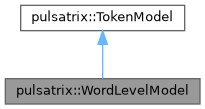
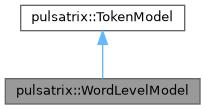
Each piece is one token, looked up in a vocabulary; unknown pieces become the unknown token.
More...
#include <tokenizer_components.hpp>
|
| | WordLevelModel (std::vector< std::string > vocab, const std::string &unk_token) |
| |
| std::vector< ModelToken > | tokenize (std::string_view piece) const override |
| |
| std::optional< int64_t > | token_to_id (std::string_view token) const override |
| |
| std::optional< std::string > | id_to_token (int64_t id) const override |
| |
| int64_t | vocab_size () const override |
| | One more than the largest id the model can produce.
|
| |
| virtual | ~TokenModel ()=default |
| |
Each piece is one token, looked up in a vocabulary; unknown pieces become the unknown token.
◆ WordLevelModel()
| pulsatrix::WordLevelModel::WordLevelModel |
( |
std::vector< std::string > |
vocab, |
|
|
const std::string & |
unk_token |
|
) |
| |
- Parameters
-
| vocab | Token strings by id. |
- Exceptions
-
| std::invalid_argument | if unk_token isn't in it, or a token repeats. |
◆ id_to_token()
| std::optional< std::string > pulsatrix::WordLevelModel::id_to_token |
( |
int64_t |
id | ) |
const |
|
overridevirtual |
◆ token_to_id()
| std::optional< int64_t > pulsatrix::WordLevelModel::token_to_id |
( |
std::string_view |
token | ) |
const |
|
overridevirtual |
◆ tokenize()
| std::vector< ModelToken > pulsatrix::WordLevelModel::tokenize |
( |
std::string_view |
piece | ) |
const |
|
overridevirtual |
◆ vocab_size()
| int64_t pulsatrix::WordLevelModel::vocab_size |
( |
| ) |
const |
|
inlineoverridevirtual |
The documentation for this class was generated from the following file:

 Public Member Functions inherited from pulsatrix::TokenModel
 1.9.8