 |
pulsatrix
|
|
pulsatrix
|
Stable interface every explainer gets, regardless of type (charter Part 2 SS2). More...
#include <cmath>#include <cstddef>#include <cstdlib>#include <optional>#include <stdexcept>#include <string>#include <typeinfo>#include <unordered_map>#include <utility>#include <vector>#include "pulsatrix/activation_snapshot.hpp"#include "pulsatrix/assert.hpp"#include "pulsatrix/autograd.hpp"#include "pulsatrix/circuit_graph.hpp"#include "pulsatrix/computation_graph.hpp"#include "pulsatrix/lrp_rule_config.hpp"#include "pulsatrix/module.hpp"#include "pulsatrix/multihead_attention_module.hpp"#include "pulsatrix/tensor.hpp"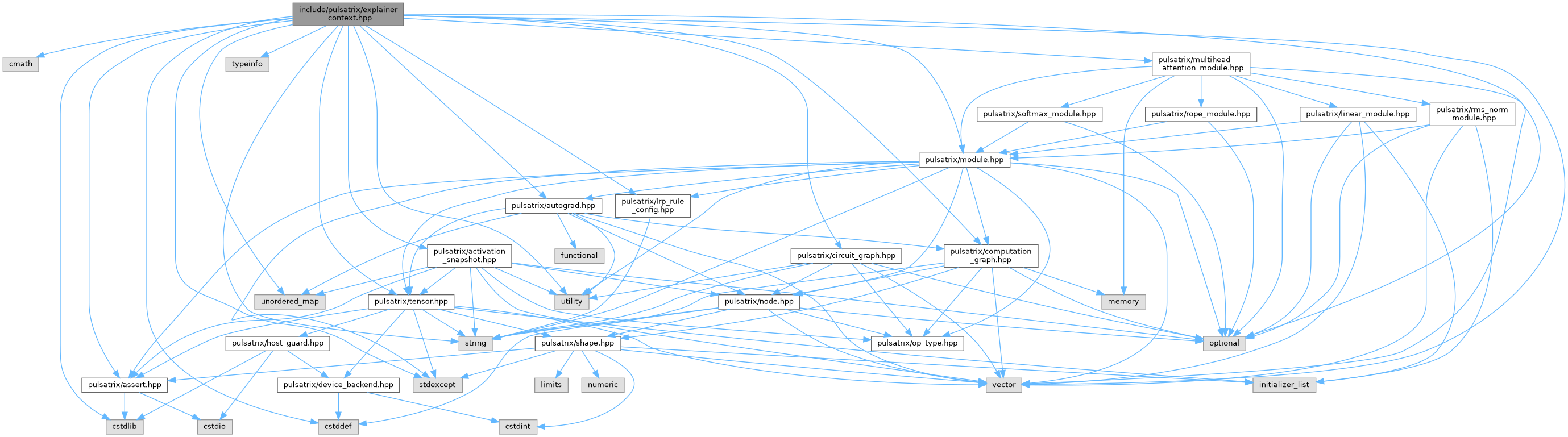
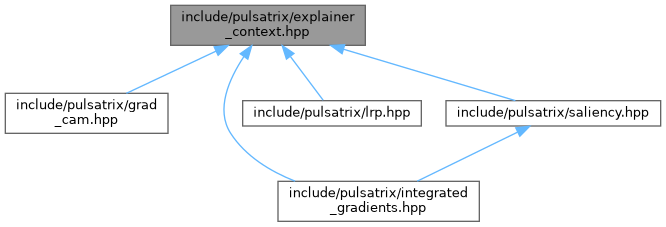
Go to the source code of this file.
Classes | |
| class | pulsatrix::ExplainerContext |
| Wraps an ordered chain of Modules, running them via Module::forward_traced to build a real ComputationGraph and Autograd backward wiring – graph-native explainers (Missions 2-3) use graph()/backward_pass()/activation(); surrogate explainers (Phase 3) would use only forward_pass(), per the charter's stated interface segregation. More... | |
Namespaces | |
| namespace | pulsatrix |
| namespace | pulsatrix::detail |
Functions | |
| std::string | pulsatrix::detail::module_type_name (const Module &module) |
| The dynamic type's readable name (e.g. "pulsatrix::SoftmaxModule"), for error messages. | |
Stable interface every explainer gets, regardless of type (charter Part 2 SS2).
 1.9.8
1.9.8