 |
pulsatrix 1.1.0
|
|
pulsatrix 1.1.0
|
A global surrogate: a shallow decision tree fitted to a model's predictions, with its fidelity to the model on held-out inputs (XAI-4; TREPAN, Craven and Shavlik 1996). More...
#include <cstdint>#include <functional>#include <string>#include <vector>#include "pulsatrix/explainer_capabilities.hpp"#include "pulsatrix/json.hpp"#include "pulsatrix/tensor.hpp"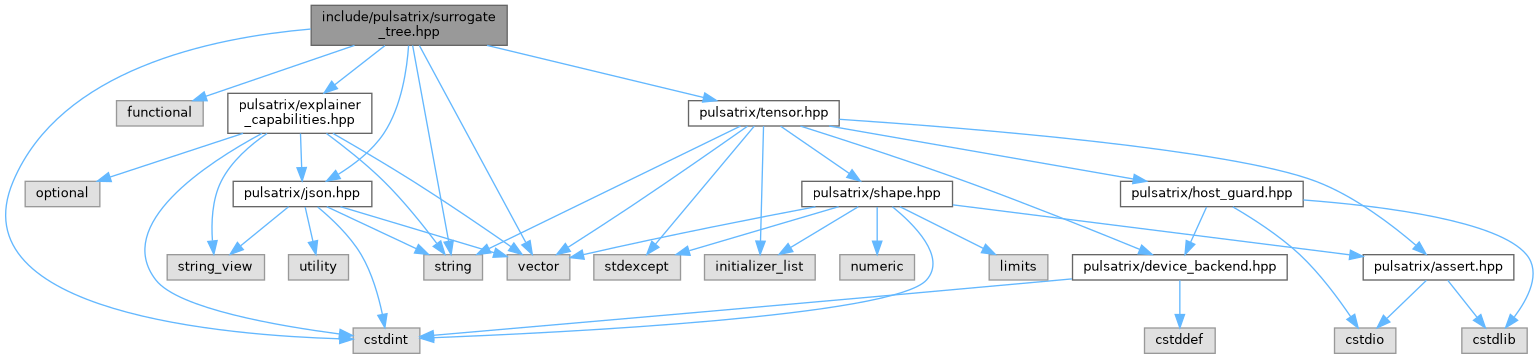
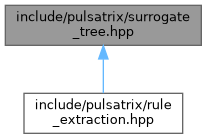
Go to the source code of this file.
Classes | |
| struct | pulsatrix::SurrogateTreeOptions |
| How the tree is grown. More... | |
| struct | pulsatrix::SurrogateNode |
| One node. A leaf has feature -1. More... | |
| struct | pulsatrix::SurrogateTree |
| A fitted tree. nodes[0] is the root. More... | |
| struct | pulsatrix::SurrogateFidelity |
| How well the tree imitates the model. More... | |
| struct | pulsatrix::SurrogateTreeResult |
| FitSurrogateTree()'s result. More... | |
Namespaces | |
| namespace | pulsatrix |
Enumerations | |
| enum class | pulsatrix::SurrogateTask { pulsatrix::Classification , pulsatrix::Regression } |
| What the surrogate imitates. More... | |
Functions | |
| SurrogateTree | pulsatrix::FitDecisionTree (const std::vector< std::vector< float > > &x, const std::vector< double > &y, SurrogateTask task, int64_t num_classes, const SurrogateTreeOptions &options) |
Fits CART to rows x and targets y: class indices for classification, values for regression. FitSurrogateTree() calls this on the model's predictions; it is public so the tree can be checked on its own. | |
| std::vector< double > | pulsatrix::FeatureImportance (const SurrogateTree &tree) |
| Each feature's share of the tree's impurity decrease (scikit-learn's feature_importances_). | |
| SurrogateTreeResult | pulsatrix::FitSurrogateTree (const std::function< Tensor(const Tensor &)> &predict, const std::vector< Tensor > &instances, const SurrogateTreeOptions &options={}) |
Labels instances with the model, holds out options.test_fraction of them, fits a tree to the rest and measures its fidelity on both parts. | |
| std::string | pulsatrix::DescribeSurrogateTree (const SurrogateTree &tree, const std::vector< std::string > &feature_names={}) |
The tree as nested if/else rules, one node per line: if income <= 41.5: ... class 1 (40 inputs, 95%). | |
| JsonValue | pulsatrix::ToJson (const SurrogateTreeResult &result, const std::vector< std::string > &feature_names={}) |
The result as a pulsatrix.surrogate_tree.v1 document. | |
| std::string_view | pulsatrix::to_string (SurrogateTask task) |
A global surrogate: a shallow decision tree fitted to a model's predictions, with its fidelity to the model on held-out inputs (XAI-4; TREPAN, Craven and Shavlik 1996).
A surrogate answers "how does the model work overall?" with rules a person can read, and its fidelity says how far to trust them: a tree that agrees with the model on 70% of new inputs describes a different model 30% of the time. Below about 85% at a readable depth, the tree isn't a description of the model (the falsifier in the roadmap's research notes).
The tree is CART as scikit-learn builds it (DecisionTreeClassifier and DecisionTreeRegressor with splitter="best"): Gini or squared-error impurity, thresholds halfway between consecutive distinct values, x <= threshold going left, nodes numbered depth first. Ties between features go to the lower index, where scikit-learn breaks them at random.
 1.9.8