 |
pulsatrix 1.1.0
|
|
pulsatrix 1.1.0
|
An explanation that says what it supports (XAI-3): the attribution together with the question and reason it was made for, the method and its settings, the results of the checks the plan asks for, and caveats derived from those results and from the method's known failure modes. More...
#include <cstdint>#include <optional>#include <string>#include <string_view>#include <utility>#include <vector>#include "pulsatrix/attribution.hpp"#include "pulsatrix/explanation_metrics.hpp"#include "pulsatrix/explanation_planner.hpp"#include "pulsatrix/json.hpp"#include "pulsatrix/module.hpp"#include "pulsatrix/performance.hpp"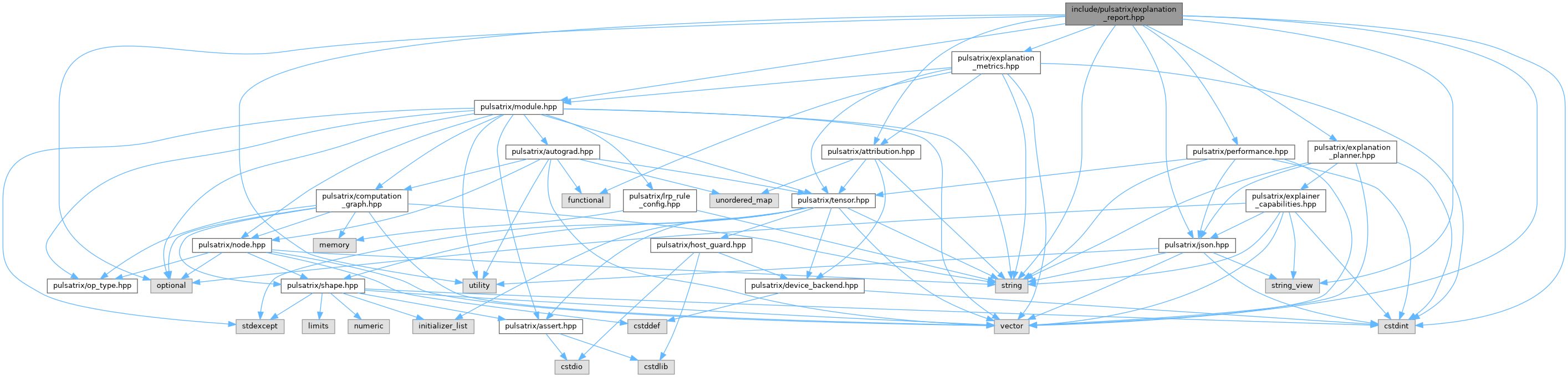
Go to the source code of this file.
Classes | |
| struct | pulsatrix::CheckResult |
| One check's result. More... | |
| struct | pulsatrix::Caveat |
| One thing the explanation doesn't support, and why. More... | |
| struct | pulsatrix::Explanation |
| An explanation and what it does and doesn't support (XAI-3). More... | |
| struct | pulsatrix::ExplanationRequest |
| What to explain, why, and what the caller has. More... | |
| struct | pulsatrix::ExplanationCheckOptions |
| How BuildExplanation() runs the checks. The defaults are the published ones where there is one; each is recorded in Explanation::settings. More... | |
Namespaces | |
| namespace | pulsatrix |
Enumerations | |
| enum class | pulsatrix::CheckOutcome { pulsatrix::Passed , pulsatrix::Failed , pulsatrix::Measured , pulsatrix::NotRun } |
| What a check found. More... | |
| enum class | pulsatrix::CaveatSeverity { pulsatrix::Blocking , pulsatrix::Warning , pulsatrix::Note } |
| How much a caveat limits what the explanation supports. More... | |
Functions | |
| Explanation | pulsatrix::BuildExplanation (const ExplanationRequest &request, const Tensor &input, const ExplainFn &explain, const PredictFn &predict, Module *model, const ExplanationCheckOptions &options={}) |
Explains input with explain and runs the checks the plan asks for. | |
| Explanation | pulsatrix::ReportExplanation (const ExplanationRequest &request, std::optional< Attribution > attribution, std::vector< CheckResult > checks) |
The report for an explanation whose checks ran elsewhere: plans request.question and request.reason, matches checks to the planned ones by name (each takes the planned priority), marks the planned checks missing from checks NotRun, and derives the caveats. | |
| CheckResult | pulsatrix::SliceErrorCheck (const SliceErrorReport &report) |
| The per_slice_error check's result for a report PerSliceError() made: Failed when a slice is worse than the rest, Passed otherwise. For ReportExplanation(), or a model BuildExplanation() can't score, such as a regressor. | |
| std::vector< Caveat > | pulsatrix::DeriveCaveats (const Explanation &explanation) |
| The caveats an explanation carries, from the report alone: | |
| std::string_view | pulsatrix::to_string (CheckOutcome outcome) |
| std::string_view | pulsatrix::to_string (CaveatSeverity severity) |
| JsonValue | pulsatrix::ToJson (const Explanation &explanation) |
The explanation as a pulsatrix.explanation.v1 document, attribution values included. | |
| std::string | pulsatrix::DescribeExplanation (const Explanation &explanation) |
| The explanation as plain text: the question, whether it supports the reason, the largest attributions, the checks and the caveats. | |
An explanation that says what it supports (XAI-3): the attribution together with the question and reason it was made for, the method and its settings, the results of the checks the plan asks for, and caveats derived from those results and from the method's known failure modes.
BuildExplanation() runs an attribution explainer and every check ExplanationPlanner (XAI-2) plans for it that pulsatrix can run on one input: faithfulness against random orderings, stability, conservation, the randomization test, the null-model baseline and aggregation over a dataset. ReportExplanation() builds the same report from checks run elsewhere, for explainers that don't return an attribution (a probe, persistent homology). Either way the caveats follow from the report alone (DeriveCaveats()), so a stored report can be re-checked.
 1.9.8