pulsatrix 1.1.0
Loading...
Searching...
No Matches
pulsatrix::CUDABackend Class Reference

CUDA-resident DeviceBackend implementation. More...

#include <cuda_backend.hpp>

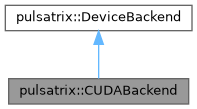
Inheritance diagram for pulsatrix::CUDABackend:
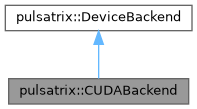
Collaboration diagram for pulsatrix::CUDABackend:

Public Member Functions

 CUDABackend ()
 
 ~CUDABackend () override
 
 CUDABackend (const CUDABackend &)=delete
 
CUDABackend & operator= (const CUDABackend &)=delete
 
DeviceType device () const noexcept override
 Which device this backend's buffers reside on.
 
void * allocate (size_t bytes) override
 Allocates a buffer of the given size.
 
void free (void *ptr) noexcept override
 Frees a buffer previously returned by allocate(). Safe to call with nullptr.
 
void copy (void *dst, const void *src, size_t bytes, CopyDirection dir) override
 Copies bytes between buffers.
 
void fill (void *ptr, float value, size_t n) override
 Fills every element of a float buffer with a constant value.
 
void gemm (const float *a, const float *b, float *out, size_t m, size_t k, size_t n) override
 Row-major matrix multiply: out = a * b.
 
void elementwise (ElementwiseOp op, const float *in, float *out, size_t n) override
 Applies a unary elementwise operation to every element of a buffer.
 
void add (const float *a, const float *b, float *out, size_t n) override
 Elementwise binary addition: out[i] = a[i] + b[i] for i in [0, n).
 
void mul (const float *a, const float *b, float *out, size_t n) override
 Elementwise binary (Hadamard) multiplication: out[i] = a[i] * b[i] for i in [0, n).
 
void gemm_ex (const float *a, bool transpose_a, const float *b, bool transpose_b, float *out, size_t m, size_t k, size_t n, float beta) override
 General row-major matrix multiply: out = op(A) * op(B) + beta * out.
 
void column_sums (const float *in, float *out, size_t rows, size_t cols, float beta) override
 Per-column sum of a (rows x cols) row-major matrix: out[j] = beta*out[j] + sum_i in[i][j].
 
void add_row_vector (const float *in, const float *row, float *out, size_t rows, size_t cols) override
 Broadcast row add: out[i][j] = in[i][j] + row[j] for a (rows x cols) matrix.
 
void add_row_vector_relu (const float *in, const float *row, float *z, float *out, size_t rows, size_t cols) override
 add_row_vector() into z, then ReLU of z into out: a Linear layer's bias and the ReLU after it (HIP-6). Both are written, since the ReLU's backward and LRP read z.
 
void elementwise_backward (ElementwiseOp op, const float *x, const float *grad_out, float *grad_in, size_t n) override
 Activation backward: grad_in[i] = grad_out[i] * f'(x[i]), f = op, x = the forward input.
 
void axpby (float alpha, const float *x, float beta, const float *y, float *out, size_t n) override
 out[i] = alpha * x[i] + beta * y[i]. out may alias x or y.
 
float dot (const float *a, const float *b, size_t n) override
 Dot product sum_i a[i]*b[i], returned to the host.
 
void gemm_strided_batched (const float *a, bool transpose_a, size_t stride_a, const float *b, bool transpose_b, size_t stride_b, float *out, size_t stride_out, size_t m, size_t k, size_t n, size_t batch, float beta=0.0f) override
 batch independent gemm_ex() products, out_i = op(A_i) op(B_i) (+ beta out_i), with A_i = a + i * stride_a and likewise for b and out; a stride of 0 shares one matrix (HIP-6: a convolution's kernel against every example's patches).
 
void accumulate_parts (const float *parts, size_t count, size_t n, float *acc) override
 acc += parts[0], then += parts[1], ... (count blocks of n floats, in order): the sums accumulating one gradient per example gave, one add() each (HIP-6).
 
void dot_into (const float *a, const float *b, size_t n, float *out) override
 No wait: the result stays on the device (HIP-6).
 
void adam_step_multi (const AdamTensorStep *tensors, size_t count, float beta1, float beta2, float eps) override
 One launch per 32 tensors, the table passed as kernel arguments (HIP-6).
 
void softmax_rows (const float *in, float *out, size_t rows, size_t cols) override
 Row-wise softmax of a (rows x cols) matrix, max-subtracted. out may alias in.
 
void softmax_rows_backward (const float *y, const float *dy, float *dx, size_t rows, size_t cols) override
 Softmax backward from its output y: dx[i][j] = y[i][j] * (dy[i][j] - sum_k y[i][k]*dy[i][k]).
 
void logsumexp_rows (const float *in, float *out, size_t rows, size_t cols) override
 Per-row log-sum-exp, max-subtracted: out[i] = log sum_j exp(in[i][j]).
 
void adam_step (float *param, const float *grad, float *m, float *v, size_t n, float lr, float beta1, float beta2, float eps, float bias_correction1, float bias_correction2) override
 One fused Adam update over n parameters.
 
float sum (const float *in, size_t n) override
 sum_i in[i], returned to the host. Same reduction order as dot(). Synchronizes.
 
void dropout_forward (const float *in, float *out, float *mask, size_t n, float p, float scale, uint64_t seed, uint64_t offset) override
 Inverted dropout with a counter-based RNG: element i is dropped iff uniform(seed, offset + i) < p; kept elements are scaled by scale.
 
void bce_with_logits (const float *logits, const float *target, float *out, size_t n) override
 Per-element binary cross-entropy with logits: out[i] = max(x, 0) - x*y + log1p(exp(-|x|)), x = logits[i], y = target[i].
 
void bce_with_logits_grad (const float *logits, const float *target, float *grad, size_t n, float scale) override
 BCE-with-logits gradient: grad[i] = (sigmoid(x) - y) * scale, using the overflow-free sigmoid (exp(x) / (1 + exp(x)) for x < 0).
 
void layer_norm_forward (const float *in, const float *gamma, const float *beta, float *xhat, float *out, float *row_std, size_t rows, size_t cols, float eps) override
 LayerNorm forward per row: xhat = (x - mean)/sqrt(var + eps), out = gamma*xhat + beta.
 
void layer_norm_backward (const float *grad_out, const float *gamma, const float *xhat, const float *row_std, float *grad_in, size_t rows, size_t cols) override
 LayerNorm input gradient per row, from the cached xhat and per-row std.
 
void rms_norm_forward (const float *in, const float *gamma, float *out, float *row_rms, size_t rows, size_t cols, float eps) override
 RMSNorm forward per row: out = gamma * x / sqrt(mean(x^2) + eps).
 
void rms_norm_backward (const float *grad_out, const float *gamma, const float *in, const float *row_rms, float *grad_in, float *gamma_terms, size_t rows, size_t cols) override
 RMSNorm input gradient per row, plus gamma_terms[r][i] = grad_out * x / rms – the per-row contributions column_sums then reduces into gamma's gradient.
 
void rope_rotate (const float *in, const float *cos_table, const float *sin_table, float *out, size_t num_slices, size_t seq_len, size_t head_dim, bool inverse, bool rotate_half) override
 Rotary position embedding over (num_slices, seq_len, head_dim) data.
 
void permute_0213 (const float *in, float *out, size_t d0, size_t d1, size_t d2, size_t d3) override
 Swaps the middle two axes: in (d0, d1, d2, d3) -> out (d0, d2, d1, d3).
 
void attention_mask_fill (float *scores, const float *key_keep, size_t batch, size_t heads, size_t q_len, size_t k_len, bool causal, size_t q_offset, size_t window, float value) override
 Overwrites the masked entries of (batch, heads, q_len, k_len) attention scores with value, in place (LLM-1).
 
void gather_rows (const float *table, const float *indices, float *out, size_t count, size_t dim) override
 out[i][:] = table[indices[i]][:] for count rows of width dim.
 
void scatter_add_rows (const float *src, const float *indices, float *table, size_t count, size_t dim) override
 table[indices[i]][:] += src[i][:] for i = 0..count-1, in increasing i.
 
void tanh_gaussian_forward (const float *mean, const float *log_std, const float *eps, float *action, float *std_cache, float *log_prob, size_t rows, size_t cols, float stabilizer, double half_log_two_pi) override
 TanhGaussianPolicy sampling per (rows, cols) row: action = tanh(mean + exp(log_std)*eps), std_cache = exp(log_std), log_prob[r] accumulated in double.
 
void tanh_gaussian_backward (const float *action, const float *std_cache, const float *eps, const float *grad_action, const float *grad_log_prob, float *grad_mean, float *grad_log_std, size_t n, float stabilizer) override
 TanhGaussianPolicy gradients w.r.t. mean and log_std, per element.
 
void lrp_linear (const float *x, const float *w, const float *z, const float *r, float *r_in, size_t rows, size_t in_features, size_t out_features, float eps) override
 LinearModule epsilon rule: r_in[n][i] = sum_j (x[n][i] w[i][j] / stab(z[n][j])) r[n][j].
 
void lrp_residual_split (const float *a, const float *b, const float *r, float *r_a, float *r_b, size_t n, float eps) override
 Epsilon split of a residual sum y = a + b: r_a = (a / stab(y)) r, r_b = (b / stab(y)) r.
 
void lrp_bilinear_elementwise (const float *a, const float *b, const float *r, float *r_out, size_t n, float eps) override
 Eq. 15 for an elementwise product c = a*b: r_out = (a b / (2c + eps sign c)) r (same for both).
 
void lrp_bilinear_matmul (const float *a, const float *b, const float *o, const float *r_o, float *r_a, float *r_b, size_t slices, size_t m, size_t p, size_t q, float eps, bool b_transposed) override
 Eq. 15 for slices independent matmuls O = A @ B (A (M x P), B (P x Q), O and r_o (M x Q)).
 
void lrp_softmax_rows (const float *x, const float *y, const float *r, float *r_in, size_t rows, size_t cols) override
 SoftmaxModule rule per row: r_in = x * (r - y * sum(r)).
 
void lrp_rope (const float *x, const float *y, const float *r, const float *cos_table, const float *sin_table, float *r_in, size_t slices, size_t seq_len, size_t head_dim, float eps, bool rotate_half) override
 RoPEModule epsilon rule over (slices, seq_len, head_dim), tables as for rope_rotate.
 
void logic_pointwise (LogicOp op, int norm, const float *a, const float *b, const float *g_or_r, const float *y, float *out_a, float *out_b, size_t n, float eps) override
 One elementwise pass of Conjunction/Disjunction for operands a, b.
 
void aggregator_forward (const float *x, float *mean_pow, float *out, size_t n, size_t cols, float p) override
 AggregatorModule power mean over the leading axis of an (n, cols) input, per column.
 
void aggregator_backward (const float *x, const float *mean_pow, const float *grad_out, float *grad_in, size_t n, size_t cols, float p) override
 AggregatorModule input gradient, per column.
 
void aggregator_lrp (const float *x, const float *mean_pow, const float *r_out, float *r_in, size_t n, size_t cols, float p, float eps) override
 AggregatorModule epsilon rule, per column.
 
void im2col (const float *in, float *col, size_t n, size_t c, size_t h, size_t w, const ConvGeometry &geometry) override
 Unfolds (n, c, h, w) into (n, c*kh*kw, out_h*out_w) patches, with out_h = (h + 2*pad_h - kh) / stride_h + 1 (likewise out_w). Taps that fall in the zero padding read 0.
 
void col2im_add (const float *col, float *out, size_t n, size_t c, size_t h, size_t w, const ConvGeometry &geometry) override
 Folds (n, c*kh*kw, out_h*out_w) patches back, adding into out (n, c, h, w).
 
void add_channel_vector (const float *in, const float *vec, float *out, size_t n, size_t c, size_t inner) override
 out[i][ch][k] = in[i][ch][k] + vec[ch] over (n, c, inner). out may alias in.
 
void lrp_conv (const float *col, const float *kernel, const float *pre_bias, const float *r, float *r_col, size_t n, size_t out_channels, size_t p, size_t q, float eps) override
 Conv2D epsilon rule in patch space: r_col (n, p, q) from the cached patches, the kernel (out_channels, p) and the pre-bias outputs (n, out_channels, q).
 
void lrp_stabilized_divide (const float *r, const float *denom, const float *gate, float *out, size_t n, float eps, LrpGate gate_mode) override
 Gated stabilized division, the one non-gemm step of the affine LRP rules: out[i] = passes(gate[i]) ? r[i] / (denom[i] + eps sign(denom[i])) : 0, sign(0) = +1.
 
void max_pool_forward (const float *in, float *out, float *argmax, size_t planes, size_t h, size_t w, size_t kh, size_t kw, size_t sh, size_t sw, size_t ph, size_t pw) override
 Max pool over planes of (h, w) with a (kh, kw) window, stride (sh, sw) and padding (ph, pw); padded positions never win. Output (planes, out_h, out_w) with out = (n + 2 pad - k) / stride + 1. argmax = flat in-plane input index (first max wins).
 
void max_unpool (const float *src, const float *argmax, float *dst, size_t planes, size_t h, size_t w, size_t kh, size_t kw, size_t sh, size_t sw, size_t ph, size_t pw) override
 The inverse routing: each input position gets the sum of the pooled values whose argmax it is (windows may overlap). dst (planes, h, w) is overwritten.
 
void avg_pool_forward (const float *in, float *out, size_t planes, size_t h, size_t w, size_t kh, size_t kw) override
 Non-overlapping average pool over planes of (h, w).
 
void avg_pool_backward (const float *grad_out, float *grad_in, size_t planes, size_t h, size_t w, size_t kh, size_t kw) override
 Spreads grad_out / (kh*kw) over each window; grad_in must be zeroed by the caller.
 
void lrp_avg_pool (const float *x, const float *r, float *r_in, size_t planes, size_t h, size_t w, size_t kh, size_t kw, float eps) override
 AvgPool2D epsilon rule; r_in must be zeroed by the caller.
 
void batch_norm_forward (const float *in, const float *gamma, const float *beta, float *xhat, float *out, float *channel_std, size_t n, size_t c, size_t spatial, float eps) override
 BatchNorm over (n, spatial) per channel of (n, c, spatial) data.
 
void batch_norm_backward (const float *grad_out, const float *gamma, const float *xhat, const float *channel_std, float *grad_in, float *gamma_grad, float *beta_grad, size_t n, size_t c, size_t spatial) override
 BatchNorm input gradient plus this call's gamma/beta gradients (overwritten, per channel).
 
void batch_norm_update_running (const float *in, float *running_mean, float *running_var, size_t n, size_t c, size_t spatial, float momentum) override
 Folds this batch's per-channel mean and unbiased variance into the running ones (PyTorch's momentum rule; the variance is kept when a channel has one value). FND-5.
 
void batch_norm_eval_forward (const float *in, const float *gamma, const float *beta, const float *running_mean, const float *running_var, float *xhat, float *out, float *channel_std, size_t n, size_t c, size_t spatial, float eps) override
 Eval-mode BatchNorm from the running statistics: a per-channel affine map. FND-5.
 
void batch_norm_eval_backward (const float *grad_out, const float *gamma, const float *xhat, const float *channel_std, float *grad_in, float *gamma_grad, float *beta_grad, size_t n, size_t c, size_t spatial) override
 Eval-mode BatchNorm gradient: grad_out * gamma / std, plus gamma/beta gradients (overwritten, per channel). FND-5.
 
void group_norm_forward (const float *in, const float *gamma, const float *beta, float *xhat, float *out, float *group_std, size_t n, size_t c, size_t spatial, size_t num_groups, float eps) override
 GroupNorm per (example, group) of (n, c, spatial) data; group_std is (n, num_groups).
 
void group_norm_backward (const float *grad_out, const float *gamma, const float *xhat, const float *group_std, float *grad_in, float *gamma_grad, float *beta_grad, size_t n, size_t c, size_t spatial, size_t num_groups) override
 GroupNorm input gradient plus this call's gamma/beta gradients (overwritten, per channel).
 
void copy_2d (float *dst, size_t dst_stride, const float *src, size_t src_stride, size_t rows, size_t cols) override
 Strided 2-D copy: rows of cols floats from src (row stride src_stride) to dst (row stride dst_stride) – e.g. one timestep of an (N, L, D) sequence.
 
void accumulate_rows (const float *in, float *out, size_t rows, size_t cols) override
 out[j] += in[i][j] for i = 0..rows-1 in order, accumulating straight into out.
 
void recurrent_cell (RecurrentCellOp op, const RecurrentCellArgs &args, size_t n) override
 One fused recurrent-cell pass over n elements (see RecurrentCellOp for slots).
 
void gru_lrp_hprev (const float *h_prev, const float *w_hn, const float *hn, const float *r_term_b, const float *direct, float *r_hprev, size_t rows, size_t hidden, float eps) override
 GRU's R_hprev for (rows, hidden): the recurrent epsilon-rule sum through W_hn, with each element's direct term inserted where the original loop added it.
 
void ssm_pass (SsmPassOp op, const SsmPassArgs &args) override
 One fused Mamba / RWKV / RetNet pass (see SsmPassOp for lanes and slots).
 
void rl_rows (RlRowOp op, const RlRowArgs &args) override
 One fused RL loss / target / Polyak pass (see RlRowOp for lanes and slots).
 
void top_k_rows (const float *in, float *values, float *indices, size_t rows, size_t cols, size_t k, bool largest) override
 Per row of a row-major (rows, cols) matrix: the k largest (or smallest) values in rank order into values (rows, k), and their column indices into indices (rows, k) as whole-number floats.
 
- Public Member Functions inherited from pulsatrix::DeviceBackend

virtual ~DeviceBackend ()=default
 

Detailed Description

CUDA-resident DeviceBackend implementation.

Note
gemm uses cuBLAS (cublasSgemm) with the column-major swap-and-transpose trick, since cuBLAS assumes column-major storage and this project's Tensor is row-major – see gpu_backend_programming/context_gpu_cublas_cudnn_integration.md. elementwise/add are hand-written kernels, one thread per element.
Modules, optimizers, losses and LRP run on CUDA tensors through DeviceBackend's primitives. Unlike HIPBackend, every op waits for the GPU before returning, and device memory is allocated with plain cudaMalloc (no caching allocator yet).

Constructor & Destructor Documentation

◆ CUDABackend() [1/2]

pulsatrix::CUDABackend::CUDABackend ( )

◆ ~CUDABackend()

pulsatrix::CUDABackend::~CUDABackend ( )
override

◆ CUDABackend() [2/2]

pulsatrix::CUDABackend::CUDABackend ( const CUDABackend &  )
delete

Member Function Documentation

◆ accumulate_parts()

void pulsatrix::CUDABackend::accumulate_parts ( const float *  parts,
size_t  count,
size_t  n,
float *  acc 
)
overridevirtual

acc += parts[0], then += parts[1], ... (count blocks of n floats, in order): the sums accumulating one gradient per example gave, one add() each (HIP-6).

Note
The default is those add() calls; GPU backends do it in one launch, each element adding the parts in the same order.

Reimplemented from pulsatrix::DeviceBackend.

◆ accumulate_rows()

void pulsatrix::CUDABackend::accumulate_rows ( const float *  in,
float *  out,
size_t  rows,
size_t  cols 
)
overridevirtual

out[j] += in[i][j] for i = 0..rows-1 in order, accumulating straight into out.

Note
Unlike column_sums(beta = 1), which adds a finished column sum to out, this adds row by row into the running value – the association the recurrent modules' bias gradients always used.

Implements pulsatrix::DeviceBackend.

◆ adam_step()

void pulsatrix::CUDABackend::adam_step ( float *  param,
const float *  grad,
float *  m,
float *  v,
size_t  n,
float  lr,
float  beta1,
float  beta2,
float  eps,
float  bias_correction1,
float  bias_correction2 
)
overridevirtual

One fused Adam update over n parameters.

Parameters
bias_correction11 - beta1^t, computed once on the host per step.
bias_correction21 - beta2^t, likewise.
Note
Same per-element expression order as the pre-campaign AdamOptimizer host loop: m = b1*m + (1-b1)*g; v = b2*v + (1-b2)*g*g; p -= lr * (m/bc1) / (sqrt(v/bc2) + eps).

Implements pulsatrix::DeviceBackend.

◆ adam_step_multi()

void pulsatrix::CUDABackend::adam_step_multi ( const AdamTensorStep *  tensors,
size_t  count,
float  beta1,
float  beta2,
float  eps 
)
overridevirtual

One launch per 32 tensors, the table passed as kernel arguments (HIP-6).

Reimplemented from pulsatrix::DeviceBackend.

◆ add()

void pulsatrix::CUDABackend::add ( const float *  a,
const float *  b,
float *  out,
size_t  n 
)
overridevirtual

Elementwise binary addition: out[i] = a[i] + b[i] for i in [0, n).

Parameters
aFirst operand, must hold at least n floats.
bSecond operand, must hold at least n floats.
outOutput buffer, must hold at least n floats. May alias a or b for an in-place accumulation.
nNumber of elements.
Note
A separate method from elementwise() rather than extending ElementwiseOp with a binary case – see ElementwiseOp's own
. Added in Mission 3 (Phase 0 autograd) specifically because gradient accumulation (multiple children contributing to a shared parent's gradient) needs it; this is the resolution of the binary-op design decision deferred since Mission 0.

Implements pulsatrix::DeviceBackend.

◆ add_channel_vector()

void pulsatrix::CUDABackend::add_channel_vector ( const float *  in,
const float *  vec,
float *  out,
size_t  n,
size_t  c,
size_t  inner 
)
overridevirtual

out[i][ch][k] = in[i][ch][k] + vec[ch] over (n, c, inner). out may alias in.

Implements pulsatrix::DeviceBackend.

◆ add_row_vector()

void pulsatrix::CUDABackend::add_row_vector ( const float *  in,
const float *  row,
float *  out,
size_t  rows,
size_t  cols 
)
overridevirtual

Broadcast row add: out[i][j] = in[i][j] + row[j] for a (rows x cols) matrix.

Note
out may alias in.

Implements pulsatrix::DeviceBackend.

◆ add_row_vector_relu()

void pulsatrix::CUDABackend::add_row_vector_relu ( const float *  in,
const float *  row,
float *  z,
float *  out,
size_t  rows,
size_t  cols 
)
overridevirtual

add_row_vector() into z, then ReLU of z into out: a Linear layer's bias and the ReLU after it (HIP-6). Both are written, since the ReLU's backward and LRP read z.

Note
The default is those two calls; GPU backends do both in one launch with the same arithmetic, so the values are identical.

Reimplemented from pulsatrix::DeviceBackend.

◆ aggregator_backward()

void pulsatrix::CUDABackend::aggregator_backward ( const float *  x,
const float *  mean_pow,
const float *  grad_out,
float *  grad_in,
size_t  n,
size_t  cols,
float  p 
)
overridevirtual

AggregatorModule input gradient, per column.

Implements pulsatrix::DeviceBackend.

◆ aggregator_forward()

void pulsatrix::CUDABackend::aggregator_forward ( const float *  x,
float *  mean_pow,
float *  out,
size_t  n,
size_t  cols,
float  p 
)
overridevirtual

AggregatorModule power mean over the leading axis of an (n, cols) input, per column.

Implements pulsatrix::DeviceBackend.

◆ aggregator_lrp()

void pulsatrix::CUDABackend::aggregator_lrp ( const float *  x,
const float *  mean_pow,
const float *  r_out,
float *  r_in,
size_t  n,
size_t  cols,
float  p,
float  eps 
)
overridevirtual

AggregatorModule epsilon rule, per column.

Implements pulsatrix::DeviceBackend.

◆ allocate()

void * pulsatrix::CUDABackend::allocate ( size_t  bytes)
overridevirtual

Allocates a buffer of the given size.

Parameters
bytesNumber of bytes to allocate. A request of 0 bytes returns nullptr by convention (not an error) — there is nothing to allocate.
Returns
Pointer to the allocated buffer, or nullptr iff bytes == 0.
Exceptions
std::runtime_errorif a nonzero-size allocation fails. Never silently returns nullptr for a nonzero request.

Implements pulsatrix::DeviceBackend.

◆ attention_mask_fill()

void pulsatrix::CUDABackend::attention_mask_fill ( float *  scores,
const float *  key_keep,
size_t  batch,
size_t  heads,
size_t  q_len,
size_t  k_len,
bool  causal,
size_t  q_offset,
size_t  window,
float  value 
)
overridevirtual

Overwrites the masked entries of (batch, heads, q_len, k_len) attention scores with value, in place (LLM-1).

Parameters
key_keep(batch, k_len): 0 masks that key for every query and head, anything else keeps it. nullptr masks no key.
causalAlso masks key j for query i when j > i + q_offset.
q_offsetAbsolute position of query 0 among the keys (0 unless a cache holds earlier keys).
windowWith causal, a sliding window (LLM-9): also masks key j for query i when j + window <= i + q_offset, so each query sees its last window positions, itself included (Hugging Face's kv_idx > q_idx - sliding_window). 0 is no window.
Note
Attention calls it three times per pass: value = lowest float on the scores before softmax, and value = 0 on the score gradient and on the score relevance.

Implements pulsatrix::DeviceBackend.

◆ avg_pool_backward()

void pulsatrix::CUDABackend::avg_pool_backward ( const float *  grad_out,
float *  grad_in,
size_t  planes,
size_t  h,
size_t  w,
size_t  kh,
size_t  kw 
)
overridevirtual

Spreads grad_out / (kh*kw) over each window; grad_in must be zeroed by the caller.

Implements pulsatrix::DeviceBackend.

◆ avg_pool_forward()

void pulsatrix::CUDABackend::avg_pool_forward ( const float *  in,
float *  out,
size_t  planes,
size_t  h,
size_t  w,
size_t  kh,
size_t  kw 
)
overridevirtual

Non-overlapping average pool over planes of (h, w).

Implements pulsatrix::DeviceBackend.

◆ axpby()

void pulsatrix::CUDABackend::axpby ( float  alpha,
const float *  x,
float  beta,
const float *  y,
float *  out,
size_t  n 
)
overridevirtual

out[i] = alpha * x[i] + beta * y[i]. out may alias x or y.

Note
beta == 0 does not read y (BLAS convention), so out = alpha * x exactly even where y holds inf/NaN – otherwise 0 * inf would turn a scale-only call into NaN.

Implements pulsatrix::DeviceBackend.

◆ batch_norm_backward()

void pulsatrix::CUDABackend::batch_norm_backward ( const float *  grad_out,
const float *  gamma,
const float *  xhat,
const float *  channel_std,
float *  grad_in,
float *  gamma_grad,
float *  beta_grad,
size_t  n,
size_t  c,
size_t  spatial 
)
overridevirtual

BatchNorm input gradient plus this call's gamma/beta gradients (overwritten, per channel).

Implements pulsatrix::DeviceBackend.

◆ batch_norm_eval_backward()

void pulsatrix::CUDABackend::batch_norm_eval_backward ( const float *  grad_out,
const float *  gamma,
const float *  xhat,
const float *  channel_std,
float *  grad_in,
float *  gamma_grad,
float *  beta_grad,
size_t  n,
size_t  c,
size_t  spatial 
)
overridevirtual

Eval-mode BatchNorm gradient: grad_out * gamma / std, plus gamma/beta gradients (overwritten, per channel). FND-5.

Implements pulsatrix::DeviceBackend.

◆ batch_norm_eval_forward()

void pulsatrix::CUDABackend::batch_norm_eval_forward ( const float *  in,
const float *  gamma,
const float *  beta,
const float *  running_mean,
const float *  running_var,
float *  xhat,
float *  out,
float *  channel_std,
size_t  n,
size_t  c,
size_t  spatial,
float  eps 
)
overridevirtual

Eval-mode BatchNorm from the running statistics: a per-channel affine map. FND-5.

Implements pulsatrix::DeviceBackend.

◆ batch_norm_forward()

void pulsatrix::CUDABackend::batch_norm_forward ( const float *  in,
const float *  gamma,
const float *  beta,
float *  xhat,
float *  out,
float *  channel_std,
size_t  n,
size_t  c,
size_t  spatial,
float  eps 
)
overridevirtual

BatchNorm over (n, spatial) per channel of (n, c, spatial) data.

Implements pulsatrix::DeviceBackend.

◆ batch_norm_update_running()

void pulsatrix::CUDABackend::batch_norm_update_running ( const float *  in,
float *  running_mean,
float *  running_var,
size_t  n,
size_t  c,
size_t  spatial,
float  momentum 
)
overridevirtual

Folds this batch's per-channel mean and unbiased variance into the running ones (PyTorch's momentum rule; the variance is kept when a channel has one value). FND-5.

Implements pulsatrix::DeviceBackend.

◆ bce_with_logits()

void pulsatrix::CUDABackend::bce_with_logits ( const float *  logits,
const float *  target,
float *  out,
size_t  n 
)
overridevirtual

Per-element binary cross-entropy with logits: out[i] = max(x, 0) - x*y + log1p(exp(-|x|)), x = logits[i], y = target[i].

Note
Fused rather than composed from elementwise ops: this exact evaluation order is what BCEWithLogitsLoss has always computed, and no composition reproduces its rounding.

Implements pulsatrix::DeviceBackend.

◆ bce_with_logits_grad()

void pulsatrix::CUDABackend::bce_with_logits_grad ( const float *  logits,
const float *  target,
float *  grad,
size_t  n,
float  scale 
)
overridevirtual

BCE-with-logits gradient: grad[i] = (sigmoid(x) - y) * scale, using the overflow-free sigmoid (exp(x) / (1 + exp(x)) for x < 0).

Implements pulsatrix::DeviceBackend.

◆ col2im_add()

void pulsatrix::CUDABackend::col2im_add ( const float *  col,
float *  out,
size_t  n,
size_t  c,
size_t  h,
size_t  w,
const ConvGeometry &  geometry 
)
overridevirtual

Folds (n, c*kh*kw, out_h*out_w) patches back, adding into out (n, c, h, w).

Note
A gather: one GPU thread per output pixel sums its window contributions in the same order the CPU scatter loop adds them – deterministic, no atomics.

Implements pulsatrix::DeviceBackend.

◆ column_sums()

void pulsatrix::CUDABackend::column_sums ( const float *  in,
float *  out,
size_t  rows,
size_t  cols,
float  beta 
)
overridevirtual

Per-column sum of a (rows x cols) row-major matrix: out[j] = beta*out[j] + sum_i in[i][j].

Note
Rows are summed in increasing i on every backend. out must not alias in.

Implements pulsatrix::DeviceBackend.

◆ copy()

void pulsatrix::CUDABackend::copy ( void *  dst,
const void *  src,
size_t  bytes,
CopyDirection  dir 
)
overridevirtual

Copies bytes between buffers.

Parameters
dstDestination buffer, must be large enough to hold bytes.
srcSource buffer.
bytesNumber of bytes to copy.
dirDirection of the copy (informs device-specific implementations which memory space each pointer lives in; CPUBackend ignores it).

Implements pulsatrix::DeviceBackend.

◆ copy_2d()

void pulsatrix::CUDABackend::copy_2d ( float *  dst,
size_t  dst_stride,
const float *  src,
size_t  src_stride,
size_t  rows,
size_t  cols 
)
overridevirtual

Strided 2-D copy: rows of cols floats from src (row stride src_stride) to dst (row stride dst_stride) – e.g. one timestep of an (N, L, D) sequence.

Implements pulsatrix::DeviceBackend.

◆ device()

DeviceType pulsatrix::CUDABackend::device ( ) const
inlineoverridevirtualnoexcept

Which device this backend's buffers reside on.

Note
Tensor's constructors that take no explicit DeviceType tag the Tensor with this, so a temporary allocated through a CUDA/HIP backend can no longer be silently labelled Cpu (the default-tag defect found by the GPU-native-kernels campaign recon: a mislabelled tensor makes Tensor pick HostToHost copies on device memory and lets host-only guards pass).

Implements pulsatrix::DeviceBackend.

◆ dot()

float pulsatrix::CUDABackend::dot ( const float *  a,
const float *  b,
size_t  n 
)
overridevirtual

Dot product sum_i a[i]*b[i], returned to the host.

Note
Synchronizes. Fixed-order reduction on every backend, but GPU order differs from CPU's sequential sum, so CPU and GPU agree to rounding, not bitwise.

Implements pulsatrix::DeviceBackend.

◆ dot_into()

void pulsatrix::CUDABackend::dot_into ( const float *  a,
const float *  b,
size_t  n,
float *  out 
)
overridevirtual

No wait: the result stays on the device (HIP-6).

Reimplemented from pulsatrix::DeviceBackend.

◆ dropout_forward()

void pulsatrix::CUDABackend::dropout_forward ( const float *  in,
float *  out,
float *  mask,
size_t  n,
float  p,
float  scale,
uint64_t  seed,
uint64_t  offset 
)
overridevirtual

Inverted dropout with a counter-based RNG: element i is dropped iff uniform(seed, offset + i) < p; kept elements are scaled by scale.

Parameters
maskReceives 1.0 (kept) or 0.0 (dropped) per element, for backward().
Note
uniform(seed, k) is splitmix64(seed + (k + 1) * golden_gamma), top 24 bits as a float in [0, 1). Stateless and identical on every backend, so a GPU mask is bit-identical to the CPU one for the same (seed, offset) – the property that lets Dropout be tested CPU-vs-GPU at all. A dropped element is written as 0 (a select, not in * 0), so an inf/NaN input there still yields 0.

Implements pulsatrix::DeviceBackend.

◆ elementwise()

void pulsatrix::CUDABackend::elementwise ( ElementwiseOp  op,
const float *  in,
float *  out,
size_t  n 
)
overridevirtual

Applies a unary elementwise operation to every element of a buffer.

Parameters
opOperation to apply.
inInput buffer, must hold at least n floats.
outOutput buffer, must hold at least n floats. May alias in for an in-place application.
nNumber of elements.

Implements pulsatrix::DeviceBackend.

◆ elementwise_backward()

void pulsatrix::CUDABackend::elementwise_backward ( ElementwiseOp  op,
const float *  x,
const float *  grad_out,
float *  grad_in,
size_t  n 
)
overridevirtual

Activation backward: grad_in[i] = grad_out[i] * f'(x[i]), f = op, x = the forward input.

Note
Derivatives: Relu selects grad_out where x > 0, else 0 (0 at x == 0 and for a non-finite grad_out, matching ReluModule); Neg -1; Tanh 1 - tanh(x)^2; Sigmoid s(1 - s); Silu s + x*s*(1 - s), s = sigmoid(x); Exp exp(x). grad_in may alias grad_out or x.

Implements pulsatrix::DeviceBackend.

◆ fill()

void pulsatrix::CUDABackend::fill ( void *  ptr,
float  value,
size_t  n 
)
overridevirtual

Fills every element of a float buffer with a constant value.

Parameters
ptrBuffer to fill, must hold at least n floats.
valueFill value.
nNumber of elements to fill.

Implements pulsatrix::DeviceBackend.

◆ free()

void pulsatrix::CUDABackend::free ( void *  ptr)
overridevirtualnoexcept

Frees a buffer previously returned by allocate(). Safe to call with nullptr.

Implements pulsatrix::DeviceBackend.

◆ gather_rows()

void pulsatrix::CUDABackend::gather_rows ( const float *  table,
const float *  indices,
float *  out,
size_t  count,
size_t  dim 
)
overridevirtual

out[i][:] = table[indices[i]][:] for count rows of width dim.

Implements pulsatrix::DeviceBackend.

◆ gemm()

void pulsatrix::CUDABackend::gemm ( const float *  a,
const float *  b,
float *  out,
size_t  m,
size_t  k,
size_t  n 
)
overridevirtual

Row-major matrix multiply: out = a * b.

Parameters
aPointer to A (m x k), row-major.
bPointer to B (k x n), row-major.
outPointer to the output buffer (m x n), row-major. Must be pre-allocated by the caller.
mRows of A / rows of out.
kColumns of A / rows of B.
nColumns of B / columns of out.

Implements pulsatrix::DeviceBackend.

◆ gemm_ex()

void pulsatrix::CUDABackend::gemm_ex ( const float *  a,
bool  transpose_a,
const float *  b,
bool  transpose_b,
float *  out,
size_t  m,
size_t  k,
size_t  n,
float  beta 
)
overridevirtual

General row-major matrix multiply: out = op(A) * op(B) + beta * out.

Parameters
aA, stored (m x k) row-major, or (k x m) when transpose_a.
transpose_aUse A^T.
bB, stored (k x n) row-major, or (n x k) when transpose_b.
transpose_bUse B^T.
out(m x n) row-major. Read only when beta != 0 (beta == 0 overwrites, so out may hold garbage). Must not alias a or b.
betaScale on the existing out; 1 accumulates (gradient accumulation).
Note
Replaces the explicit host-side transpose() copies modules built to feed gemm().

Implements pulsatrix::DeviceBackend.

◆ gemm_strided_batched()

void pulsatrix::CUDABackend::gemm_strided_batched ( const float *  a,
bool  transpose_a,
size_t  stride_a,
const float *  b,
bool  transpose_b,
size_t  stride_b,
float *  out,
size_t  stride_out,
size_t  m,
size_t  k,
size_t  n,
size_t  batch,
float  beta = 0.0f 
)
overridevirtual

batch independent gemm_ex() products, out_i = op(A_i) op(B_i) (+ beta out_i), with A_i = a + i * stride_a and likewise for b and out; a stride of 0 shares one matrix (HIP-6: a convolution's kernel against every example's patches).

Note
The default makes the batch's calls one by one (gemm() when nothing is transposed and beta is 0, as the callers did before), so its results are those calls'. GPU backends override it with one strided-batched BLAS call.

Reimplemented from pulsatrix::DeviceBackend.

◆ group_norm_backward()

void pulsatrix::CUDABackend::group_norm_backward ( const float *  grad_out,
const float *  gamma,
const float *  xhat,
const float *  group_std,
float *  grad_in,
float *  gamma_grad,
float *  beta_grad,
size_t  n,
size_t  c,
size_t  spatial,
size_t  num_groups 
)
overridevirtual

GroupNorm input gradient plus this call's gamma/beta gradients (overwritten, per channel).

Implements pulsatrix::DeviceBackend.

◆ group_norm_forward()

void pulsatrix::CUDABackend::group_norm_forward ( const float *  in,
const float *  gamma,
const float *  beta,
float *  xhat,
float *  out,
float *  group_std,
size_t  n,
size_t  c,
size_t  spatial,
size_t  num_groups,
float  eps 
)
overridevirtual

GroupNorm per (example, group) of (n, c, spatial) data; group_std is (n, num_groups).

Implements pulsatrix::DeviceBackend.

◆ gru_lrp_hprev()

void pulsatrix::CUDABackend::gru_lrp_hprev ( const float *  h_prev,
const float *  w_hn,
const float *  hn,
const float *  r_term_b,
const float *  direct,
float *  r_hprev,
size_t  rows,
size_t  hidden,
float  eps 
)
overridevirtual

GRU's R_hprev for (rows, hidden): the recurrent epsilon-rule sum through W_hn, with each element's direct term inserted where the original loop added it.

Implements pulsatrix::DeviceBackend.

◆ im2col()

void pulsatrix::CUDABackend::im2col ( const float *  in,
float *  col,
size_t  n,
size_t  c,
size_t  h,
size_t  w,
const ConvGeometry &  geometry 
)
overridevirtual

Unfolds (n, c, h, w) into (n, c*kh*kw, out_h*out_w) patches, with out_h = (h + 2*pad_h - kh) / stride_h + 1 (likewise out_w). Taps that fall in the zero padding read 0.

Implements pulsatrix::DeviceBackend.

◆ layer_norm_backward()

void pulsatrix::CUDABackend::layer_norm_backward ( const float *  grad_out,
const float *  gamma,
const float *  xhat,
const float *  row_std,
float *  grad_in,
size_t  rows,
size_t  cols 
)
overridevirtual

LayerNorm input gradient per row, from the cached xhat and per-row std.

Implements pulsatrix::DeviceBackend.

◆ layer_norm_forward()

void pulsatrix::CUDABackend::layer_norm_forward ( const float *  in,
const float *  gamma,
const float *  beta,
float *  xhat,
float *  out,
float *  row_std,
size_t  rows,
size_t  cols,
float  eps 
)
overridevirtual

LayerNorm forward per row: xhat = (x - mean)/sqrt(var + eps), out = gamma*xhat + beta.

Implements pulsatrix::DeviceBackend.

◆ logic_pointwise()

void pulsatrix::CUDABackend::logic_pointwise ( LogicOp  op,
int  norm,
const float *  a,
const float *  b,
const float *  g_or_r,
const float *  y,
float *  out_a,
float *  out_b,
size_t  n,
float  eps 
)
overridevirtual

One elementwise pass of Conjunction/Disjunction for operands a, b.

Parameters
g_or_rUpstream gradient (Backward) or relevance (Lrp); unused by Forward.
yCached forward output (Lrp only).
out_aForward: the output. Backward/Lrp: a's gradient/relevance.
out_bBackward/Lrp: b's gradient/relevance; unused by Forward.

Implements pulsatrix::DeviceBackend.

◆ logsumexp_rows()

void pulsatrix::CUDABackend::logsumexp_rows ( const float *  in,
float *  out,
size_t  rows,
size_t  cols 
)
overridevirtual

Per-row log-sum-exp, max-subtracted: out[i] = log sum_j exp(in[i][j]).

Implements pulsatrix::DeviceBackend.

◆ lrp_avg_pool()

void pulsatrix::CUDABackend::lrp_avg_pool ( const float *  x,
const float *  r,
float *  r_in,
size_t  planes,
size_t  h,
size_t  w,
size_t  kh,
size_t  kw,
float  eps 
)
overridevirtual

AvgPool2D epsilon rule; r_in must be zeroed by the caller.

Implements pulsatrix::DeviceBackend.

◆ lrp_bilinear_elementwise()

void pulsatrix::CUDABackend::lrp_bilinear_elementwise ( const float *  a,
const float *  b,
const float *  r,
float *  r_out,
size_t  n,
float  eps 
)
overridevirtual

Eq. 15 for an elementwise product c = a*b: r_out = (a b / (2c + eps sign c)) r (same for both).

Implements pulsatrix::DeviceBackend.

◆ lrp_bilinear_matmul()

void pulsatrix::CUDABackend::lrp_bilinear_matmul ( const float *  a,
const float *  b,
const float *  o,
const float *  r_o,
float *  r_a,
float *  r_b,
size_t  slices,
size_t  m,
size_t  p,
size_t  q,
float  eps,
bool  b_transposed 
)
overridevirtual

Eq. 15 for slices independent matmuls O = A @ B (A (M x P), B (P x Q), O and r_o (M x Q)).

Parameters
b_transposedB is stored as B^T (Q x P); r_b is then written in that same layout.
Note
r_a and r_b are overwritten (not accumulated into).

Implements pulsatrix::DeviceBackend.

◆ lrp_conv()

void pulsatrix::CUDABackend::lrp_conv ( const float *  col,
const float *  kernel,
const float *  pre_bias,
const float *  r,
float *  r_col,
size_t  n,
size_t  out_channels,
size_t  p,
size_t  q,
float  eps 
)
overridevirtual

Conv2D epsilon rule in patch space: r_col (n, p, q) from the cached patches, the kernel (out_channels, p) and the pre-bias outputs (n, out_channels, q).

Implements pulsatrix::DeviceBackend.

◆ lrp_linear()

void pulsatrix::CUDABackend::lrp_linear ( const float *  x,
const float *  w,
const float *  z,
const float *  r,
float *  r_in,
size_t  rows,
size_t  in_features,
size_t  out_features,
float  eps 
)
overridevirtual

LinearModule epsilon rule: r_in[n][i] = sum_j (x[n][i] w[i][j] / stab(z[n][j])) r[n][j].

Parameters
z(N, out) pre-bias outputs; w (in, out); x, r_in (N, in); r (N, out).

Implements pulsatrix::DeviceBackend.

◆ lrp_residual_split()

void pulsatrix::CUDABackend::lrp_residual_split ( const float *  a,
const float *  b,
const float *  r,
float *  r_a,
float *  r_b,
size_t  n,
float  eps 
)
overridevirtual

Epsilon split of a residual sum y = a + b: r_a = (a / stab(y)) r, r_b = (b / stab(y)) r.

Implements pulsatrix::DeviceBackend.

◆ lrp_rope()

void pulsatrix::CUDABackend::lrp_rope ( const float *  x,
const float *  y,
const float *  r,
const float *  cos_table,
const float *  sin_table,
float *  r_in,
size_t  slices,
size_t  seq_len,
size_t  head_dim,
float  eps,
bool  rotate_half 
)
overridevirtual

RoPEModule epsilon rule over (slices, seq_len, head_dim), tables as for rope_rotate.

Implements pulsatrix::DeviceBackend.

◆ lrp_softmax_rows()

void pulsatrix::CUDABackend::lrp_softmax_rows ( const float *  x,
const float *  y,
const float *  r,
float *  r_in,
size_t  rows,
size_t  cols 
)
overridevirtual

SoftmaxModule rule per row: r_in = x * (r - y * sum(r)).

Implements pulsatrix::DeviceBackend.

◆ lrp_stabilized_divide()

void pulsatrix::CUDABackend::lrp_stabilized_divide ( const float *  r,
const float *  denom,
const float *  gate,
float *  out,
size_t  n,
float  eps,
LrpGate  gate_mode 
)
overridevirtual

Gated stabilized division, the one non-gemm step of the affine LRP rules: out[i] = passes(gate[i]) ? r[i] / (denom[i] + eps sign(denom[i])) : 0, sign(0) = +1.

Parameters
gateRead only when gate_mode != LrpGate::None (may then be nullptr).
Note
out may alias r or denom.

Implements pulsatrix::DeviceBackend.

◆ max_pool_forward()

void pulsatrix::CUDABackend::max_pool_forward ( const float *  in,
float *  out,
float *  argmax,
size_t  planes,
size_t  h,
size_t  w,
size_t  kh,
size_t  kw,
size_t  sh,
size_t  sw,
size_t  ph,
size_t  pw 
)
overridevirtual

Max pool over planes of (h, w) with a (kh, kw) window, stride (sh, sw) and padding (ph, pw); padded positions never win. Output (planes, out_h, out_w) with out = (n + 2 pad - k) / stride + 1. argmax = flat in-plane input index (first max wins).

Implements pulsatrix::DeviceBackend.

◆ max_unpool()

void pulsatrix::CUDABackend::max_unpool ( const float *  src,
const float *  argmax,
float *  dst,
size_t  planes,
size_t  h,
size_t  w,
size_t  kh,
size_t  kw,
size_t  sh,
size_t  sw,
size_t  ph,
size_t  pw 
)
overridevirtual

The inverse routing: each input position gets the sum of the pooled values whose argmax it is (windows may overlap). dst (planes, h, w) is overwritten.

Implements pulsatrix::DeviceBackend.

◆ mul()

void pulsatrix::CUDABackend::mul ( const float *  a,
const float *  b,
float *  out,
size_t  n 
)
overridevirtual

Elementwise binary (Hadamard) multiplication: out[i] = a[i] * b[i] for i in [0, n).

Parameters
aFirst operand, must hold at least n floats.
bSecond operand, must hold at least n floats.
outOutput buffer, must hold at least n floats. May alias a or b for an in-place application.
nNumber of elements.
Note
Added in Phase 6's SwiGLU mission (mission_swiglu.md) – the third consumer needing a Hadamard product via a raw host loop (after LSTMModule's/GRUModule's gate arithmetic), the trigger point the Risk Register named for finally adding this primitive properly instead of a fourth raw loop. LSTMModule/GRUModule's existing raw loops are not retrofitted to use it – no behavior change needed there, logged as a low-priority future cleanup only.

Implements pulsatrix::DeviceBackend.

◆ operator=()

CUDABackend & pulsatrix::CUDABackend::operator= ( const CUDABackend &  )
delete

◆ permute_0213()

void pulsatrix::CUDABackend::permute_0213 ( const float *  in,
float *  out,
size_t  d0,
size_t  d1,
size_t  d2,
size_t  d3 
)
overridevirtual

Swaps the middle two axes: in (d0, d1, d2, d3) -> out (d0, d2, d1, d3).

Note
Attention's head split ((N, L, H, D) -> (N, H, L, D)) and merge (the reverse) are both this permutation. out must not alias in.

Implements pulsatrix::DeviceBackend.

◆ recurrent_cell()

void pulsatrix::CUDABackend::recurrent_cell ( RecurrentCellOp  op,
const RecurrentCellArgs &  args,
size_t  n 
)
overridevirtual

One fused recurrent-cell pass over n elements (see RecurrentCellOp for slots).

Implements pulsatrix::DeviceBackend.

◆ rl_rows()

void pulsatrix::CUDABackend::rl_rows ( RlRowOp  op,
const RlRowArgs &  args 
)
overridevirtual

One fused RL loss / target / Polyak pass (see RlRowOp for lanes and slots).

Note
One lane per row: a row's softmax, argmax and gradient writes are owned by its lane and walk the columns in the original loop order. Per-row loss terms are reduced by the caller with column_sums, which adds rows in increasing order like the original loop.

Implements pulsatrix::DeviceBackend.

◆ rms_norm_backward()

void pulsatrix::CUDABackend::rms_norm_backward ( const float *  grad_out,
const float *  gamma,
const float *  in,
const float *  row_rms,
float *  grad_in,
float *  gamma_terms,
size_t  rows,
size_t  cols 
)
overridevirtual

RMSNorm input gradient per row, plus gamma_terms[r][i] = grad_out * x / rms – the per-row contributions column_sums then reduces into gamma's gradient.

Implements pulsatrix::DeviceBackend.

◆ rms_norm_forward()

void pulsatrix::CUDABackend::rms_norm_forward ( const float *  in,
const float *  gamma,
float *  out,
float *  row_rms,
size_t  rows,
size_t  cols,
float  eps 
)
overridevirtual

RMSNorm forward per row: out = gamma * x / sqrt(mean(x^2) + eps).

Implements pulsatrix::DeviceBackend.

◆ rope_rotate()

void pulsatrix::CUDABackend::rope_rotate ( const float *  in,
const float *  cos_table,
const float *  sin_table,
float *  out,
size_t  num_slices,
size_t  seq_len,
size_t  head_dim,
bool  inverse,
bool  rotate_half 
)
overridevirtual

Rotary position embedding over (num_slices, seq_len, head_dim) data.

Parameters
cos_table,sin_table(seq_len, head_dim/2) per-position rotation tables.
inversefalse: forward rotation; true: its transpose (RoPE's backward).
rotate_halffalse: pair i is features (2i, 2i+1). true: pair i is (i, i + head_dim/2), the Hugging Face "rotate half" layout (LLM-1).
Note
out must not alias in.

Implements pulsatrix::DeviceBackend.

◆ scatter_add_rows()

void pulsatrix::CUDABackend::scatter_add_rows ( const float *  src,
const float *  indices,
float *  table,
size_t  count,
size_t  dim 
)
overridevirtual

table[indices[i]][:] += src[i][:] for i = 0..count-1, in increasing i.

Note
Deterministic: the GPU kernel runs one thread per column and walks i in order – repeated indices accumulate in the same order as the CPU, no atomics.

Implements pulsatrix::DeviceBackend.

◆ softmax_rows()

void pulsatrix::CUDABackend::softmax_rows ( const float *  in,
float *  out,
size_t  rows,
size_t  cols 
)
overridevirtual

Row-wise softmax of a (rows x cols) matrix, max-subtracted. out may alias in.

Implements pulsatrix::DeviceBackend.

◆ softmax_rows_backward()

void pulsatrix::CUDABackend::softmax_rows_backward ( const float *  y,
const float *  dy,
float *  dx,
size_t  rows,
size_t  cols 
)
overridevirtual

Softmax backward from its output y: dx[i][j] = y[i][j] * (dy[i][j] - sum_k y[i][k]*dy[i][k]).

Note
dx must not alias y or dy.

Implements pulsatrix::DeviceBackend.

◆ ssm_pass()

void pulsatrix::CUDABackend::ssm_pass ( SsmPassOp  op,
const SsmPassArgs &  args 
)
overridevirtual

One fused Mamba / RWKV / RetNet pass (see SsmPassOp for lanes and slots).

Note
Recurrences run one lane per independent (batch, channel[, state]) sequence, walking time in order inside the lane – parallel over lanes, sequential over time, the CPU's order. Every reduction is owned by one lane and summed in the original loop order.

Implements pulsatrix::DeviceBackend.

◆ sum()

float pulsatrix::CUDABackend::sum ( const float *  in,
size_t  n 
)
overridevirtual

sum_i in[i], returned to the host. Same reduction order as dot(). Synchronizes.

Implements pulsatrix::DeviceBackend.

◆ tanh_gaussian_backward()

void pulsatrix::CUDABackend::tanh_gaussian_backward ( const float *  action,
const float *  std_cache,
const float *  eps,
const float *  grad_action,
const float *  grad_log_prob,
float *  grad_mean,
float *  grad_log_std,
size_t  n,
float  stabilizer 
)
overridevirtual

TanhGaussianPolicy gradients w.r.t. mean and log_std, per element.

Implements pulsatrix::DeviceBackend.

◆ tanh_gaussian_forward()

void pulsatrix::CUDABackend::tanh_gaussian_forward ( const float *  mean,
const float *  log_std,
const float *  eps,
float *  action,
float *  std_cache,
float *  log_prob,
size_t  rows,
size_t  cols,
float  stabilizer,
double  half_log_two_pi 
)
overridevirtual

TanhGaussianPolicy sampling per (rows, cols) row: action = tanh(mean + exp(log_std)*eps), std_cache = exp(log_std), log_prob[r] accumulated in double.

Implements pulsatrix::DeviceBackend.

◆ top_k_rows()

void pulsatrix::CUDABackend::top_k_rows ( const float *  in,
float *  values,
float *  indices,
size_t  rows,
size_t  cols,
size_t  k,
bool  largest 
)
overridevirtual

Per row of a row-major (rows, cols) matrix: the k largest (or smallest) values in rank order into values (rows, k), and their column indices into indices (rows, k) as whole-number floats.

Note
Order: NaN ranks above every number; equal values keep the lower column index first. One lane per row, pure selection: every backend's output is bit-identical.
Preconditions, validated by the caller (top_k()): 1 <= k <= cols, cols <= 2^24.

Implements pulsatrix::DeviceBackend.


The documentation for this class was generated from the following file: