pulsatrix
Loading...
Searching...
No Matches
pulsatrix::HIPBackend Class Reference

HIP-resident DeviceBackend implementation, targeting AMD GPUs via ROCm. More...

#include <hip_backend.hpp>

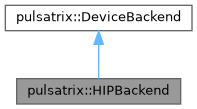
Inheritance diagram for pulsatrix::HIPBackend:
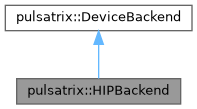
Collaboration diagram for pulsatrix::HIPBackend:

Public Member Functions

 HIPBackend ()
 
 ~HIPBackend () override
 
 HIPBackend (const HIPBackend &)=delete
 
HIPBackend & operator= (const HIPBackend &)=delete
 
DeviceType device () const noexcept override
 Which device this backend's buffers reside on.
 
void * allocate (size_t bytes) override
 Allocates a buffer of the given size.
 
void free (void *ptr) noexcept override
 Frees a buffer previously returned by allocate(). Safe to call with nullptr.
 
void copy (void *dst, const void *src, size_t bytes, CopyDirection dir) override
 Copies bytes between buffers.
 
void fill (void *ptr, float value, size_t n) override
 Fills every element of a float buffer with a constant value.
 
void gemm (const float *a, const float *b, float *out, size_t m, size_t k, size_t n) override
 Row-major matrix multiply: out = a * b.
 
void elementwise (ElementwiseOp op, const float *in, float *out, size_t n) override
 Applies a unary elementwise operation to every element of a buffer.
 
void add (const float *a, const float *b, float *out, size_t n) override
 Elementwise binary addition: out[i] = a[i] + b[i] for i in [0, n).
 
void mul (const float *a, const float *b, float *out, size_t n) override
 Elementwise binary (Hadamard) multiplication: out[i] = a[i] * b[i] for i in [0, n).
 
void gemm_ex (const float *a, bool transpose_a, const float *b, bool transpose_b, float *out, size_t m, size_t k, size_t n, float beta) override
 General row-major matrix multiply: out = op(A) * op(B) + beta * out.
 
void column_sums (const float *in, float *out, size_t rows, size_t cols, float beta) override
 Per-column sum of a (rows x cols) row-major matrix: out[j] = beta*out[j] + sum_i in[i][j].
 
void add_row_vector (const float *in, const float *row, float *out, size_t rows, size_t cols) override
 Broadcast row add: out[i][j] = in[i][j] + row[j] for a (rows x cols) matrix.
 
void elementwise_backward (ElementwiseOp op, const float *x, const float *grad_out, float *grad_in, size_t n) override
 Activation backward: grad_in[i] = grad_out[i] * f'(x[i]), f = op, x = the forward input.
 
void axpby (float alpha, const float *x, float beta, const float *y, float *out, size_t n) override
 out[i] = alpha * x[i] + beta * y[i]. out may alias x or y.
 
float dot (const float *a, const float *b, size_t n) override
 Dot product sum_i a[i]*b[i], returned to the host.
 
void softmax_rows (const float *in, float *out, size_t rows, size_t cols) override
 Row-wise softmax of a (rows x cols) matrix, max-subtracted. out may alias in.
 
void softmax_rows_backward (const float *y, const float *dy, float *dx, size_t rows, size_t cols) override
 Softmax backward from its output y: dx[i][j] = y[i][j] * (dy[i][j] - sum_k y[i][k]*dy[i][k]).
 
void logsumexp_rows (const float *in, float *out, size_t rows, size_t cols) override
 Per-row log-sum-exp, max-subtracted: out[i] = log sum_j exp(in[i][j]).
 
void adam_step (float *param, const float *grad, float *m, float *v, size_t n, float lr, float beta1, float beta2, float eps, float bias_correction1, float bias_correction2) override
 One fused Adam update over n parameters.
 
float sum (const float *in, size_t n) override
 sum_i in[i], returned to the host. Same reduction order as dot(). Synchronizes.
 
void dropout_forward (const float *in, float *out, float *mask, size_t n, float p, float scale, uint64_t seed, uint64_t offset) override
 Inverted dropout with a counter-based RNG: element i is dropped iff uniform(seed, offset + i) < p; kept elements are scaled by scale.
 
void bce_with_logits (const float *logits, const float *target, float *out, size_t n) override
 Per-element binary cross-entropy with logits: out[i] = max(x, 0) - x*y + log1p(exp(-|x|)), x = logits[i], y = target[i].
 
void bce_with_logits_grad (const float *logits, const float *target, float *grad, size_t n, float scale) override
 BCE-with-logits gradient: grad[i] = (sigmoid(x) - y) * scale, using the overflow-free sigmoid (exp(x) / (1 + exp(x)) for x < 0).
 
void layer_norm_forward (const float *in, const float *gamma, const float *beta, float *xhat, float *out, float *row_std, size_t rows, size_t cols, float eps) override
 LayerNorm forward per row: xhat = (x - mean)/sqrt(var + eps), out = gamma*xhat + beta.
 
void layer_norm_backward (const float *grad_out, const float *gamma, const float *xhat, const float *row_std, float *grad_in, size_t rows, size_t cols) override
 LayerNorm input gradient per row, from the cached xhat and per-row std.
 
void rms_norm_forward (const float *in, const float *gamma, float *out, float *row_rms, size_t rows, size_t cols, float eps) override
 RMSNorm forward per row: out = gamma * x / sqrt(mean(x^2) + eps).
 
void rms_norm_backward (const float *grad_out, const float *gamma, const float *in, const float *row_rms, float *grad_in, float *gamma_terms, size_t rows, size_t cols) override
 RMSNorm input gradient per row, plus gamma_terms[r][i] = grad_out * x / rms – the per-row contributions column_sums then reduces into gamma's gradient.
 
void rope_rotate (const float *in, const float *cos_table, const float *sin_table, float *out, size_t num_slices, size_t seq_len, size_t head_dim, bool inverse) override
 Rotary position embedding over (num_slices, seq_len, head_dim) data.
 
void permute_0213 (const float *in, float *out, size_t d0, size_t d1, size_t d2, size_t d3) override
 Swaps the middle two axes: in (d0, d1, d2, d3) -> out (d0, d2, d1, d3).
 
void gather_rows (const float *table, const float *indices, float *out, size_t count, size_t dim) override
 out[i][:] = table[indices[i]][:] for count rows of width dim.
 
void scatter_add_rows (const float *src, const float *indices, float *table, size_t count, size_t dim) override
 table[indices[i]][:] += src[i][:] for i = 0..count-1, in increasing i.
 
void tanh_gaussian_forward (const float *mean, const float *log_std, const float *eps, float *action, float *std_cache, float *log_prob, size_t rows, size_t cols, float stabilizer, double half_log_two_pi) override
 TanhGaussianPolicy sampling per (rows, cols) row: action = tanh(mean + exp(log_std)*eps), std_cache = exp(log_std), log_prob[r] accumulated in double.
 
void tanh_gaussian_backward (const float *action, const float *std_cache, const float *eps, const float *grad_action, const float *grad_log_prob, float *grad_mean, float *grad_log_std, size_t n, float stabilizer) override
 TanhGaussianPolicy gradients w.r.t. mean and log_std, per element.
 
void lrp_linear (const float *x, const float *w, const float *z, const float *r, float *r_in, size_t rows, size_t in_features, size_t out_features, float eps) override
 LinearModule epsilon rule: r_in[n][i] = sum_j (x[n][i] w[i][j] / stab(z[n][j])) r[n][j].
 
void lrp_residual_split (const float *a, const float *b, const float *r, float *r_a, float *r_b, size_t n, float eps) override
 Epsilon split of a residual sum y = a + b: r_a = (a / stab(y)) r, r_b = (b / stab(y)) r.
 
void lrp_bilinear_elementwise (const float *a, const float *b, const float *r, float *r_out, size_t n, float eps) override
 Eq. 15 for an elementwise product c = a*b: r_out = (a b / (2c + eps sign c)) r (same for both).
 
void lrp_bilinear_matmul (const float *a, const float *b, const float *o, const float *r_o, float *r_a, float *r_b, size_t slices, size_t m, size_t p, size_t q, float eps, bool b_transposed) override
 Eq. 15 for slices independent matmuls O = A @ B (A (M x P), B (P x Q), O and r_o (M x Q)).
 
void lrp_softmax_rows (const float *x, const float *y, const float *r, float *r_in, size_t rows, size_t cols) override
 SoftmaxModule rule per row: r_in = x * (r - y * sum(r)).
 
void lrp_rope (const float *x, const float *y, const float *r, const float *cos_table, const float *sin_table, float *r_in, size_t slices, size_t seq_len, size_t head_dim, float eps) override
 RoPEModule epsilon rule over (slices, seq_len, head_dim), tables as for rope_rotate.
 
void logic_pointwise (LogicOp op, int norm, const float *a, const float *b, const float *g_or_r, const float *y, float *out_a, float *out_b, size_t n, float eps) override
 One elementwise pass of Conjunction/Disjunction for operands a, b.
 
void aggregator_forward (const float *x, float *mean_pow, float *out, size_t n, size_t cols, float p) override
 AggregatorModule power mean over the leading axis of an (n, cols) input, per column.
 
void aggregator_backward (const float *x, const float *mean_pow, const float *grad_out, float *grad_in, size_t n, size_t cols, float p) override
 AggregatorModule input gradient, per column.
 
void aggregator_lrp (const float *x, const float *mean_pow, const float *r_out, float *r_in, size_t n, size_t cols, float p, float eps) override
 AggregatorModule epsilon rule, per column.
 
void im2col (const float *in, float *col, size_t n, size_t c, size_t h, size_t w, const ConvGeometry &geometry) override
 Unfolds (n, c, h, w) into (n, c*kh*kw, out_h*out_w) patches, with out_h = (h + 2*pad_h - kh) / stride_h + 1 (likewise out_w). Taps that fall in the zero padding read 0.
 
void col2im_add (const float *col, float *out, size_t n, size_t c, size_t h, size_t w, const ConvGeometry &geometry) override
 Folds (n, c*kh*kw, out_h*out_w) patches back, adding into out (n, c, h, w).
 
void add_channel_vector (const float *in, const float *vec, float *out, size_t n, size_t c, size_t inner) override
 out[i][ch][k] = in[i][ch][k] + vec[ch] over (n, c, inner). out may alias in.
 
void lrp_conv (const float *col, const float *kernel, const float *pre_bias, const float *r, float *r_col, size_t n, size_t out_channels, size_t p, size_t q, float eps) override
 Conv2D epsilon rule in patch space: r_col (n, p, q) from the cached patches, the kernel (out_channels, p) and the pre-bias outputs (n, out_channels, q).
 
void lrp_stabilized_divide (const float *r, const float *denom, const float *gate, float *out, size_t n, float eps, LrpGate gate_mode) override
 Gated stabilized division, the one non-gemm step of the affine LRP rules: out[i] = passes(gate[i]) ? r[i] / (denom[i] + eps sign(denom[i])) : 0, sign(0) = +1.
 
void max_pool_forward (const float *in, float *out, float *argmax, size_t planes, size_t h, size_t w, size_t kh, size_t kw) override
 Non-overlapping max pool over planes of (h, w); argmax = flat in-plane index (first max wins).
 
void max_unpool (const float *src, const float *argmax, float *dst, size_t planes, size_t h, size_t w, size_t kh, size_t kw) override
 dst[plane][argmax] = src for every pooled element; dst must be zeroed by the caller.
 
void avg_pool_forward (const float *in, float *out, size_t planes, size_t h, size_t w, size_t kh, size_t kw) override
 Non-overlapping average pool over planes of (h, w).
 
void avg_pool_backward (const float *grad_out, float *grad_in, size_t planes, size_t h, size_t w, size_t kh, size_t kw) override
 Spreads grad_out / (kh*kw) over each window; grad_in must be zeroed by the caller.
 
void lrp_avg_pool (const float *x, const float *r, float *r_in, size_t planes, size_t h, size_t w, size_t kh, size_t kw, float eps) override
 AvgPool2D epsilon rule; r_in must be zeroed by the caller.
 
void batch_norm_forward (const float *in, const float *gamma, const float *beta, float *xhat, float *out, float *channel_std, size_t n, size_t c, size_t spatial, float eps) override
 BatchNorm over (n, spatial) per channel of (n, c, spatial) data.
 
void batch_norm_backward (const float *grad_out, const float *gamma, const float *xhat, const float *channel_std, float *grad_in, float *gamma_grad, float *beta_grad, size_t n, size_t c, size_t spatial) override
 BatchNorm input gradient plus this call's gamma/beta gradients (overwritten, per channel).
 
void batch_norm_update_running (const float *in, float *running_mean, float *running_var, size_t n, size_t c, size_t spatial, float momentum) override
 Folds this batch's per-channel mean and unbiased variance into the running ones (PyTorch's momentum rule; the variance is kept when a channel has one value). FND-5.
 
void batch_norm_eval_forward (const float *in, const float *gamma, const float *beta, const float *running_mean, const float *running_var, float *xhat, float *out, float *channel_std, size_t n, size_t c, size_t spatial, float eps) override
 Eval-mode BatchNorm from the running statistics: a per-channel affine map. FND-5.
 
void batch_norm_eval_backward (const float *grad_out, const float *gamma, const float *xhat, const float *channel_std, float *grad_in, float *gamma_grad, float *beta_grad, size_t n, size_t c, size_t spatial) override
 Eval-mode BatchNorm gradient: grad_out * gamma / std, plus gamma/beta gradients (overwritten, per channel). FND-5.
 
void group_norm_forward (const float *in, const float *gamma, const float *beta, float *xhat, float *out, float *group_std, size_t n, size_t c, size_t spatial, size_t num_groups, float eps) override
 GroupNorm per (example, group) of (n, c, spatial) data; group_std is (n, num_groups).
 
void group_norm_backward (const float *grad_out, const float *gamma, const float *xhat, const float *group_std, float *grad_in, float *gamma_grad, float *beta_grad, size_t n, size_t c, size_t spatial, size_t num_groups) override
 GroupNorm input gradient plus this call's gamma/beta gradients (overwritten, per channel).
 
void copy_2d (float *dst, size_t dst_stride, const float *src, size_t src_stride, size_t rows, size_t cols) override
 Strided 2-D copy: rows of cols floats from src (row stride src_stride) to dst (row stride dst_stride) – e.g. one timestep of an (N, L, D) sequence.
 
void accumulate_rows (const float *in, float *out, size_t rows, size_t cols) override
 out[j] += in[i][j] for i = 0..rows-1 in order, accumulating straight into out.
 
void recurrent_cell (RecurrentCellOp op, const RecurrentCellArgs &args, size_t n) override
 One fused recurrent-cell pass over n elements (see RecurrentCellOp for slots).
 
void gru_lrp_hprev (const float *h_prev, const float *w_hn, const float *hn, const float *r_term_b, const float *direct, float *r_hprev, size_t rows, size_t hidden, float eps) override
 GRU's R_hprev for (rows, hidden): the recurrent epsilon-rule sum through W_hn, with each element's direct term inserted where the original loop added it.
 
void ssm_pass (SsmPassOp op, const SsmPassArgs &args) override
 One fused Mamba / RWKV / RetNet pass (see SsmPassOp for lanes and slots).
 
void rl_rows (RlRowOp op, const RlRowArgs &args) override
 One fused RL loss / target / Polyak pass (see RlRowOp for lanes and slots).
 
void top_k_rows (const float *in, float *values, float *indices, size_t rows, size_t cols, size_t k, bool largest) override
 Per row of a row-major (rows, cols) matrix: the k largest (or smallest) values in rank order into values (rows, k), and their column indices into indices (rows, k) as whole-number floats.
 
- Public Member Functions inherited from pulsatrix::DeviceBackend

virtual ~DeviceBackend ()=default
 

Detailed Description

HIP-resident DeviceBackend implementation, targeting AMD GPUs via ROCm.

Note
gemm uses hipBLAS (hipblasSgemm) with the column-major swap-and-transpose trick, since hipBLAS inherits cuBLAS's column-major assumption and this project's Tensor is row-major – see gpu_backend_programming/context_gpu_cublas_cudnn_integration.md. elementwise/add are hand-written kernels, one thread per element.
Structurally a mirror of CUDABackend, deliberately. Phase 1.6's HIPIFY triage found 39 of 40 references auto-convertible with no warnings in the kernel bodies at all (<<<>>>, __global__, threadIdx/blockIdx are identical in HIP), so a divergent design would add risk without adding value and would make Mission 2's three-way equivalence suite harder to read.
No warpSize handling is needed anywhere in this class: every kernel here is one-thread-per-element with no cross-lane operation, so the CDNA-wavefront-64 hazard that context_accel_rocm_hip.md flags for CUDA ports does not arise. (This project's dev device, gfx1151, reports warpSize 32 in any case.)
The same Phase 1.5 scope limit applies here: only Tensor operations that route entirely through DeviceBackend's own primitives are safe against a HIP-backed Tensor. Phase 1's Module backward/LRP/optimizer code is host-loop-only and is guarded by PULSATRIX_REQUIRE_HOST, which covers DeviceType::Hip identically to DeviceType::Cuda – those guards need no change for this backend.

Constructor & Destructor Documentation

◆ HIPBackend() [1/2]

pulsatrix::HIPBackend::HIPBackend ( )

◆ ~HIPBackend()

pulsatrix::HIPBackend::~HIPBackend ( )
override

◆ HIPBackend() [2/2]

pulsatrix::HIPBackend::HIPBackend ( const HIPBackend &  )
delete

Member Function Documentation

◆ accumulate_rows()

void pulsatrix::HIPBackend::accumulate_rows ( const float *  in,
float *  out,
size_t  rows,
size_t  cols 
)
overridevirtual

out[j] += in[i][j] for i = 0..rows-1 in order, accumulating straight into out.

Note
Unlike column_sums(beta = 1), which adds a finished column sum to out, this adds row by row into the running value – the association the recurrent modules' bias gradients always used.

Implements pulsatrix::DeviceBackend.

◆ adam_step()

void pulsatrix::HIPBackend::adam_step ( float *  param,
const float *  grad,
float *  m,
float *  v,
size_t  n,
float  lr,
float  beta1,
float  beta2,
float  eps,
float  bias_correction1,
float  bias_correction2 
)
overridevirtual

One fused Adam update over n parameters.

Parameters
bias_correction11 - beta1^t, computed once on the host per step.
bias_correction21 - beta2^t, likewise.
Note
Same per-element expression order as the pre-campaign AdamOptimizer host loop: m = b1*m + (1-b1)*g; v = b2*v + (1-b2)*g*g; p -= lr * (m/bc1) / (sqrt(v/bc2) + eps).

Implements pulsatrix::DeviceBackend.

◆ add()

void pulsatrix::HIPBackend::add ( const float *  a,
const float *  b,
float *  out,
size_t  n 
)
overridevirtual

Elementwise binary addition: out[i] = a[i] + b[i] for i in [0, n).

Parameters
aFirst operand, must hold at least n floats.
bSecond operand, must hold at least n floats.
outOutput buffer, must hold at least n floats. May alias a or b for an in-place accumulation.
nNumber of elements.
Note
A separate method from elementwise() rather than extending ElementwiseOp with a binary case – see ElementwiseOp's own
. Added in Mission 3 (Phase 0 autograd) specifically because gradient accumulation (multiple children contributing to a shared parent's gradient) needs it; this is the resolution of the binary-op design decision deferred since Mission 0.

Implements pulsatrix::DeviceBackend.

◆ add_channel_vector()

void pulsatrix::HIPBackend::add_channel_vector ( const float *  in,
const float *  vec,
float *  out,
size_t  n,
size_t  c,
size_t  inner 
)
overridevirtual

out[i][ch][k] = in[i][ch][k] + vec[ch] over (n, c, inner). out may alias in.

Implements pulsatrix::DeviceBackend.

◆ add_row_vector()

void pulsatrix::HIPBackend::add_row_vector ( const float *  in,
const float *  row,
float *  out,
size_t  rows,
size_t  cols 
)
overridevirtual

Broadcast row add: out[i][j] = in[i][j] + row[j] for a (rows x cols) matrix.

Note
out may alias in.

Implements pulsatrix::DeviceBackend.

◆ aggregator_backward()

void pulsatrix::HIPBackend::aggregator_backward ( const float *  x,
const float *  mean_pow,
const float *  grad_out,
float *  grad_in,
size_t  n,
size_t  cols,
float  p 
)
overridevirtual

AggregatorModule input gradient, per column.

Implements pulsatrix::DeviceBackend.

◆ aggregator_forward()

void pulsatrix::HIPBackend::aggregator_forward ( const float *  x,
float *  mean_pow,
float *  out,
size_t  n,
size_t  cols,
float  p 
)
overridevirtual

AggregatorModule power mean over the leading axis of an (n, cols) input, per column.

Implements pulsatrix::DeviceBackend.

◆ aggregator_lrp()

void pulsatrix::HIPBackend::aggregator_lrp ( const float *  x,
const float *  mean_pow,
const float *  r_out,
float *  r_in,
size_t  n,
size_t  cols,
float  p,
float  eps 
)
overridevirtual

AggregatorModule epsilon rule, per column.

Implements pulsatrix::DeviceBackend.

◆ allocate()

void * pulsatrix::HIPBackend::allocate ( size_t  bytes)
overridevirtual

Allocates a buffer of the given size.

Parameters
bytesNumber of bytes to allocate. A request of 0 bytes returns nullptr by convention (not an error) — there is nothing to allocate.
Returns
Pointer to the allocated buffer, or nullptr iff bytes == 0.
Exceptions
std::runtime_errorif a nonzero-size allocation fails. Never silently returns nullptr for a nonzero request.

Implements pulsatrix::DeviceBackend.

◆ avg_pool_backward()

void pulsatrix::HIPBackend::avg_pool_backward ( const float *  grad_out,
float *  grad_in,
size_t  planes,
size_t  h,
size_t  w,
size_t  kh,
size_t  kw 
)
overridevirtual

Spreads grad_out / (kh*kw) over each window; grad_in must be zeroed by the caller.

Implements pulsatrix::DeviceBackend.

◆ avg_pool_forward()

void pulsatrix::HIPBackend::avg_pool_forward ( const float *  in,
float *  out,
size_t  planes,
size_t  h,
size_t  w,
size_t  kh,
size_t  kw 
)
overridevirtual

Non-overlapping average pool over planes of (h, w).

Implements pulsatrix::DeviceBackend.

◆ axpby()

void pulsatrix::HIPBackend::axpby ( float  alpha,
const float *  x,
float  beta,
const float *  y,
float *  out,
size_t  n 
)
overridevirtual

out[i] = alpha * x[i] + beta * y[i]. out may alias x or y.

Note
beta == 0 does not read y (BLAS convention), so out = alpha * x exactly even where y holds inf/NaN – otherwise 0 * inf would turn a scale-only call into NaN.

Implements pulsatrix::DeviceBackend.

◆ batch_norm_backward()

void pulsatrix::HIPBackend::batch_norm_backward ( const float *  grad_out,
const float *  gamma,
const float *  xhat,
const float *  channel_std,
float *  grad_in,
float *  gamma_grad,
float *  beta_grad,
size_t  n,
size_t  c,
size_t  spatial 
)
overridevirtual

BatchNorm input gradient plus this call's gamma/beta gradients (overwritten, per channel).

Implements pulsatrix::DeviceBackend.

◆ batch_norm_eval_backward()

void pulsatrix::HIPBackend::batch_norm_eval_backward ( const float *  grad_out,
const float *  gamma,
const float *  xhat,
const float *  channel_std,
float *  grad_in,
float *  gamma_grad,
float *  beta_grad,
size_t  n,
size_t  c,
size_t  spatial 
)
overridevirtual

Eval-mode BatchNorm gradient: grad_out * gamma / std, plus gamma/beta gradients (overwritten, per channel). FND-5.

Implements pulsatrix::DeviceBackend.

◆ batch_norm_eval_forward()

void pulsatrix::HIPBackend::batch_norm_eval_forward ( const float *  in,
const float *  gamma,
const float *  beta,
const float *  running_mean,
const float *  running_var,
float *  xhat,
float *  out,
float *  channel_std,
size_t  n,
size_t  c,
size_t  spatial,
float  eps 
)
overridevirtual

Eval-mode BatchNorm from the running statistics: a per-channel affine map. FND-5.

Implements pulsatrix::DeviceBackend.

◆ batch_norm_forward()

void pulsatrix::HIPBackend::batch_norm_forward ( const float *  in,
const float *  gamma,
const float *  beta,
float *  xhat,
float *  out,
float *  channel_std,
size_t  n,
size_t  c,
size_t  spatial,
float  eps 
)
overridevirtual

BatchNorm over (n, spatial) per channel of (n, c, spatial) data.

Implements pulsatrix::DeviceBackend.

◆ batch_norm_update_running()

void pulsatrix::HIPBackend::batch_norm_update_running ( const float *  in,
float *  running_mean,
float *  running_var,
size_t  n,
size_t  c,
size_t  spatial,
float  momentum 
)
overridevirtual

Folds this batch's per-channel mean and unbiased variance into the running ones (PyTorch's momentum rule; the variance is kept when a channel has one value). FND-5.

Implements pulsatrix::DeviceBackend.

◆ bce_with_logits()

void pulsatrix::HIPBackend::bce_with_logits ( const float *  logits,
const float *  target,
float *  out,
size_t  n 
)
overridevirtual

Per-element binary cross-entropy with logits: out[i] = max(x, 0) - x*y + log1p(exp(-|x|)), x = logits[i], y = target[i].

Note
Fused rather than composed from elementwise ops: this exact evaluation order is what BCEWithLogitsLoss has always computed, and no composition reproduces its rounding.

Implements pulsatrix::DeviceBackend.

◆ bce_with_logits_grad()

void pulsatrix::HIPBackend::bce_with_logits_grad ( const float *  logits,
const float *  target,
float *  grad,
size_t  n,
float  scale 
)
overridevirtual

BCE-with-logits gradient: grad[i] = (sigmoid(x) - y) * scale, using the overflow-free sigmoid (exp(x) / (1 + exp(x)) for x < 0).

Implements pulsatrix::DeviceBackend.

◆ col2im_add()

void pulsatrix::HIPBackend::col2im_add ( const float *  col,
float *  out,
size_t  n,
size_t  c,
size_t  h,
size_t  w,
const ConvGeometry &  geometry 
)
overridevirtual

Folds (n, c*kh*kw, out_h*out_w) patches back, adding into out (n, c, h, w).

Note
A gather: one GPU thread per output pixel sums its window contributions in the same order the CPU scatter loop adds them – deterministic, no atomics.

Implements pulsatrix::DeviceBackend.

◆ column_sums()

void pulsatrix::HIPBackend::column_sums ( const float *  in,
float *  out,
size_t  rows,
size_t  cols,
float  beta 
)
overridevirtual

Per-column sum of a (rows x cols) row-major matrix: out[j] = beta*out[j] + sum_i in[i][j].

Note
Rows are summed in increasing i on every backend. out must not alias in.

Implements pulsatrix::DeviceBackend.

◆ copy()

void pulsatrix::HIPBackend::copy ( void *  dst,
const void *  src,
size_t  bytes,
CopyDirection  dir 
)
overridevirtual

Copies bytes between buffers.

Parameters
dstDestination buffer, must be large enough to hold bytes.
srcSource buffer.
bytesNumber of bytes to copy.
dirDirection of the copy (informs device-specific implementations which memory space each pointer lives in; CPUBackend ignores it).

Implements pulsatrix::DeviceBackend.

◆ copy_2d()

void pulsatrix::HIPBackend::copy_2d ( float *  dst,
size_t  dst_stride,
const float *  src,
size_t  src_stride,
size_t  rows,
size_t  cols 
)
overridevirtual

Strided 2-D copy: rows of cols floats from src (row stride src_stride) to dst (row stride dst_stride) – e.g. one timestep of an (N, L, D) sequence.

Implements pulsatrix::DeviceBackend.

◆ device()

DeviceType pulsatrix::HIPBackend::device ( ) const
inlineoverridevirtualnoexcept

Which device this backend's buffers reside on.

Note
Tensor's constructors that take no explicit DeviceType tag the Tensor with this, so a temporary allocated through a CUDA/HIP backend can no longer be silently labelled Cpu (the default-tag defect found by the GPU-native-kernels campaign recon: a mislabelled tensor makes Tensor pick HostToHost copies on device memory and lets host-only guards pass).

Implements pulsatrix::DeviceBackend.

◆ dot()

float pulsatrix::HIPBackend::dot ( const float *  a,
const float *  b,
size_t  n 
)
overridevirtual

Dot product sum_i a[i]*b[i], returned to the host.

Note
Synchronizes. Fixed-order reduction on every backend, but GPU order differs from CPU's sequential sum, so CPU and GPU agree to rounding, not bitwise.

Implements pulsatrix::DeviceBackend.

◆ dropout_forward()

void pulsatrix::HIPBackend::dropout_forward ( const float *  in,
float *  out,
float *  mask,
size_t  n,
float  p,
float  scale,
uint64_t  seed,
uint64_t  offset 
)
overridevirtual

Inverted dropout with a counter-based RNG: element i is dropped iff uniform(seed, offset + i) < p; kept elements are scaled by scale.

Parameters
maskReceives 1.0 (kept) or 0.0 (dropped) per element, for backward().
Note
uniform(seed, k) is splitmix64(seed + (k + 1) * golden_gamma), top 24 bits as a float in [0, 1). Stateless and identical on every backend, so a GPU mask is bit-identical to the CPU one for the same (seed, offset) – the property that lets Dropout be tested CPU-vs-GPU at all. A dropped element is written as 0 (a select, not in * 0), so an inf/NaN input there still yields 0.

Implements pulsatrix::DeviceBackend.

◆ elementwise()

void pulsatrix::HIPBackend::elementwise ( ElementwiseOp  op,
const float *  in,
float *  out,
size_t  n 
)
overridevirtual

Applies a unary elementwise operation to every element of a buffer.

Parameters
opOperation to apply.
inInput buffer, must hold at least n floats.
outOutput buffer, must hold at least n floats. May alias in for an in-place application.
nNumber of elements.

Implements pulsatrix::DeviceBackend.

◆ elementwise_backward()

void pulsatrix::HIPBackend::elementwise_backward ( ElementwiseOp  op,
const float *  x,
const float *  grad_out,
float *  grad_in,
size_t  n 
)
overridevirtual

Activation backward: grad_in[i] = grad_out[i] * f'(x[i]), f = op, x = the forward input.

Note
Derivatives: Relu selects grad_out where x > 0, else 0 (0 at x == 0 and for a non-finite grad_out, matching ReluModule); Neg -1; Tanh 1 - tanh(x)^2; Sigmoid s(1 - s); Silu s + x*s*(1 - s), s = sigmoid(x); Exp exp(x). grad_in may alias grad_out or x.

Implements pulsatrix::DeviceBackend.

◆ fill()

void pulsatrix::HIPBackend::fill ( void *  ptr,
float  value,
size_t  n 
)
overridevirtual

Fills every element of a float buffer with a constant value.

Parameters
ptrBuffer to fill, must hold at least n floats.
valueFill value.
nNumber of elements to fill.

Implements pulsatrix::DeviceBackend.

◆ free()

void pulsatrix::HIPBackend::free ( void *  ptr)
overridevirtualnoexcept

Frees a buffer previously returned by allocate(). Safe to call with nullptr.

Implements pulsatrix::DeviceBackend.

◆ gather_rows()

void pulsatrix::HIPBackend::gather_rows ( const float *  table,
const float *  indices,
float *  out,
size_t  count,
size_t  dim 
)
overridevirtual

out[i][:] = table[indices[i]][:] for count rows of width dim.

Implements pulsatrix::DeviceBackend.

◆ gemm()

void pulsatrix::HIPBackend::gemm ( const float *  a,
const float *  b,
float *  out,
size_t  m,
size_t  k,
size_t  n 
)
overridevirtual

Row-major matrix multiply: out = a * b.

Parameters
aPointer to A (m x k), row-major.
bPointer to B (k x n), row-major.
outPointer to the output buffer (m x n), row-major. Must be pre-allocated by the caller.
mRows of A / rows of out.
kColumns of A / rows of B.
nColumns of B / columns of out.

Implements pulsatrix::DeviceBackend.

◆ gemm_ex()

void pulsatrix::HIPBackend::gemm_ex ( const float *  a,
bool  transpose_a,
const float *  b,
bool  transpose_b,
float *  out,
size_t  m,
size_t  k,
size_t  n,
float  beta 
)
overridevirtual

General row-major matrix multiply: out = op(A) * op(B) + beta * out.

Parameters
aA, stored (m x k) row-major, or (k x m) when transpose_a.
transpose_aUse A^T.
bB, stored (k x n) row-major, or (n x k) when transpose_b.
transpose_bUse B^T.
out(m x n) row-major. Read only when beta != 0 (beta == 0 overwrites, so out may hold garbage). Must not alias a or b.
betaScale on the existing out; 1 accumulates (gradient accumulation).
Note
Replaces the explicit host-side transpose() copies modules built to feed gemm().

Implements pulsatrix::DeviceBackend.

◆ group_norm_backward()

void pulsatrix::HIPBackend::group_norm_backward ( const float *  grad_out,
const float *  gamma,
const float *  xhat,
const float *  group_std,
float *  grad_in,
float *  gamma_grad,
float *  beta_grad,
size_t  n,
size_t  c,
size_t  spatial,
size_t  num_groups 
)
overridevirtual

GroupNorm input gradient plus this call's gamma/beta gradients (overwritten, per channel).

Implements pulsatrix::DeviceBackend.

◆ group_norm_forward()

void pulsatrix::HIPBackend::group_norm_forward ( const float *  in,
const float *  gamma,
const float *  beta,
float *  xhat,
float *  out,
float *  group_std,
size_t  n,
size_t  c,
size_t  spatial,
size_t  num_groups,
float  eps 
)
overridevirtual

GroupNorm per (example, group) of (n, c, spatial) data; group_std is (n, num_groups).

Implements pulsatrix::DeviceBackend.

◆ gru_lrp_hprev()

void pulsatrix::HIPBackend::gru_lrp_hprev ( const float *  h_prev,
const float *  w_hn,
const float *  hn,
const float *  r_term_b,
const float *  direct,
float *  r_hprev,
size_t  rows,
size_t  hidden,
float  eps 
)
overridevirtual

GRU's R_hprev for (rows, hidden): the recurrent epsilon-rule sum through W_hn, with each element's direct term inserted where the original loop added it.

Implements pulsatrix::DeviceBackend.

◆ im2col()

void pulsatrix::HIPBackend::im2col ( const float *  in,
float *  col,
size_t  n,
size_t  c,
size_t  h,
size_t  w,
const ConvGeometry &  geometry 
)
overridevirtual

Unfolds (n, c, h, w) into (n, c*kh*kw, out_h*out_w) patches, with out_h = (h + 2*pad_h - kh) / stride_h + 1 (likewise out_w). Taps that fall in the zero padding read 0.

Implements pulsatrix::DeviceBackend.

◆ layer_norm_backward()

void pulsatrix::HIPBackend::layer_norm_backward ( const float *  grad_out,
const float *  gamma,
const float *  xhat,
const float *  row_std,
float *  grad_in,
size_t  rows,
size_t  cols 
)
overridevirtual

LayerNorm input gradient per row, from the cached xhat and per-row std.

Implements pulsatrix::DeviceBackend.

◆ layer_norm_forward()

void pulsatrix::HIPBackend::layer_norm_forward ( const float *  in,
const float *  gamma,
const float *  beta,
float *  xhat,
float *  out,
float *  row_std,
size_t  rows,
size_t  cols,
float  eps 
)
overridevirtual

LayerNorm forward per row: xhat = (x - mean)/sqrt(var + eps), out = gamma*xhat + beta.

Implements pulsatrix::DeviceBackend.

◆ logic_pointwise()

void pulsatrix::HIPBackend::logic_pointwise ( LogicOp  op,
int  norm,
const float *  a,
const float *  b,
const float *  g_or_r,
const float *  y,
float *  out_a,
float *  out_b,
size_t  n,
float  eps 
)
overridevirtual

One elementwise pass of Conjunction/Disjunction for operands a, b.

Parameters
g_or_rUpstream gradient (Backward) or relevance (Lrp); unused by Forward.
yCached forward output (Lrp only).
out_aForward: the output. Backward/Lrp: a's gradient/relevance.
out_bBackward/Lrp: b's gradient/relevance; unused by Forward.

Implements pulsatrix::DeviceBackend.

◆ logsumexp_rows()

void pulsatrix::HIPBackend::logsumexp_rows ( const float *  in,
float *  out,
size_t  rows,
size_t  cols 
)
overridevirtual

Per-row log-sum-exp, max-subtracted: out[i] = log sum_j exp(in[i][j]).

Implements pulsatrix::DeviceBackend.

◆ lrp_avg_pool()

void pulsatrix::HIPBackend::lrp_avg_pool ( const float *  x,
const float *  r,
float *  r_in,
size_t  planes,
size_t  h,
size_t  w,
size_t  kh,
size_t  kw,
float  eps 
)
overridevirtual

AvgPool2D epsilon rule; r_in must be zeroed by the caller.

Implements pulsatrix::DeviceBackend.

◆ lrp_bilinear_elementwise()

void pulsatrix::HIPBackend::lrp_bilinear_elementwise ( const float *  a,
const float *  b,
const float *  r,
float *  r_out,
size_t  n,
float  eps 
)
overridevirtual

Eq. 15 for an elementwise product c = a*b: r_out = (a b / (2c + eps sign c)) r (same for both).

Implements pulsatrix::DeviceBackend.

◆ lrp_bilinear_matmul()

void pulsatrix::HIPBackend::lrp_bilinear_matmul ( const float *  a,
const float *  b,
const float *  o,
const float *  r_o,
float *  r_a,
float *  r_b,
size_t  slices,
size_t  m,
size_t  p,
size_t  q,
float  eps,
bool  b_transposed 
)
overridevirtual

Eq. 15 for slices independent matmuls O = A @ B (A (M x P), B (P x Q), O and r_o (M x Q)).

Parameters
b_transposedB is stored as B^T (Q x P); r_b is then written in that same layout.
Note
r_a and r_b are overwritten (not accumulated into).

Implements pulsatrix::DeviceBackend.

◆ lrp_conv()

void pulsatrix::HIPBackend::lrp_conv ( const float *  col,
const float *  kernel,
const float *  pre_bias,
const float *  r,
float *  r_col,
size_t  n,
size_t  out_channels,
size_t  p,
size_t  q,
float  eps 
)
overridevirtual

Conv2D epsilon rule in patch space: r_col (n, p, q) from the cached patches, the kernel (out_channels, p) and the pre-bias outputs (n, out_channels, q).

Implements pulsatrix::DeviceBackend.

◆ lrp_linear()

void pulsatrix::HIPBackend::lrp_linear ( const float *  x,
const float *  w,
const float *  z,
const float *  r,
float *  r_in,
size_t  rows,
size_t  in_features,
size_t  out_features,
float  eps 
)
overridevirtual

LinearModule epsilon rule: r_in[n][i] = sum_j (x[n][i] w[i][j] / stab(z[n][j])) r[n][j].

Parameters
z(N, out) pre-bias outputs; w (in, out); x, r_in (N, in); r (N, out).

Implements pulsatrix::DeviceBackend.

◆ lrp_residual_split()

void pulsatrix::HIPBackend::lrp_residual_split ( const float *  a,
const float *  b,
const float *  r,
float *  r_a,
float *  r_b,
size_t  n,
float  eps 
)
overridevirtual

Epsilon split of a residual sum y = a + b: r_a = (a / stab(y)) r, r_b = (b / stab(y)) r.

Implements pulsatrix::DeviceBackend.

◆ lrp_rope()

void pulsatrix::HIPBackend::lrp_rope ( const float *  x,
const float *  y,
const float *  r,
const float *  cos_table,
const float *  sin_table,
float *  r_in,
size_t  slices,
size_t  seq_len,
size_t  head_dim,
float  eps 
)
overridevirtual

RoPEModule epsilon rule over (slices, seq_len, head_dim), tables as for rope_rotate.

Implements pulsatrix::DeviceBackend.

◆ lrp_softmax_rows()

void pulsatrix::HIPBackend::lrp_softmax_rows ( const float *  x,
const float *  y,
const float *  r,
float *  r_in,
size_t  rows,
size_t  cols 
)
overridevirtual

SoftmaxModule rule per row: r_in = x * (r - y * sum(r)).

Implements pulsatrix::DeviceBackend.

◆ lrp_stabilized_divide()

void pulsatrix::HIPBackend::lrp_stabilized_divide ( const float *  r,
const float *  denom,
const float *  gate,
float *  out,
size_t  n,
float  eps,
LrpGate  gate_mode 
)
overridevirtual

Gated stabilized division, the one non-gemm step of the affine LRP rules: out[i] = passes(gate[i]) ? r[i] / (denom[i] + eps sign(denom[i])) : 0, sign(0) = +1.

Parameters
gateRead only when gate_mode != LrpGate::None (may then be nullptr).
Note
out may alias r or denom.

Implements pulsatrix::DeviceBackend.

◆ max_pool_forward()

void pulsatrix::HIPBackend::max_pool_forward ( const float *  in,
float *  out,
float *  argmax,
size_t  planes,
size_t  h,
size_t  w,
size_t  kh,
size_t  kw 
)
overridevirtual

Non-overlapping max pool over planes of (h, w); argmax = flat in-plane index (first max wins).

Implements pulsatrix::DeviceBackend.

◆ max_unpool()

void pulsatrix::HIPBackend::max_unpool ( const float *  src,
const float *  argmax,
float *  dst,
size_t  planes,
size_t  h,
size_t  w,
size_t  kh,
size_t  kw 
)
overridevirtual

dst[plane][argmax] = src for every pooled element; dst must be zeroed by the caller.

Implements pulsatrix::DeviceBackend.

◆ mul()

void pulsatrix::HIPBackend::mul ( const float *  a,
const float *  b,
float *  out,
size_t  n 
)
overridevirtual

Elementwise binary (Hadamard) multiplication: out[i] = a[i] * b[i] for i in [0, n).

Parameters
aFirst operand, must hold at least n floats.
bSecond operand, must hold at least n floats.
outOutput buffer, must hold at least n floats. May alias a or b for an in-place application.
nNumber of elements.
Note
Added in Phase 6's SwiGLU mission (mission_swiglu.md) – the third consumer needing a Hadamard product via a raw host loop (after LSTMModule's/GRUModule's gate arithmetic), the trigger point the Risk Register named for finally adding this primitive properly instead of a fourth raw loop. LSTMModule/GRUModule's existing raw loops are not retrofitted to use it – no behavior change needed there, logged as a low-priority future cleanup only.

Implements pulsatrix::DeviceBackend.

◆ operator=()

HIPBackend & pulsatrix::HIPBackend::operator= ( const HIPBackend &  )
delete

◆ permute_0213()

void pulsatrix::HIPBackend::permute_0213 ( const float *  in,
float *  out,
size_t  d0,
size_t  d1,
size_t  d2,
size_t  d3 
)
overridevirtual

Swaps the middle two axes: in (d0, d1, d2, d3) -> out (d0, d2, d1, d3).

Note
Attention's head split ((N, L, H, D) -> (N, H, L, D)) and merge (the reverse) are both this permutation. out must not alias in.

Implements pulsatrix::DeviceBackend.

◆ recurrent_cell()

void pulsatrix::HIPBackend::recurrent_cell ( RecurrentCellOp  op,
const RecurrentCellArgs &  args,
size_t  n 
)
overridevirtual

One fused recurrent-cell pass over n elements (see RecurrentCellOp for slots).

Implements pulsatrix::DeviceBackend.

◆ rl_rows()

void pulsatrix::HIPBackend::rl_rows ( RlRowOp  op,
const RlRowArgs &  args 
)
overridevirtual

One fused RL loss / target / Polyak pass (see RlRowOp for lanes and slots).

Note
One lane per row: a row's softmax, argmax and gradient writes are owned by its lane and walk the columns in the original loop order. Per-row loss terms are reduced by the caller with column_sums, which adds rows in increasing order like the original loop.

Implements pulsatrix::DeviceBackend.

◆ rms_norm_backward()

void pulsatrix::HIPBackend::rms_norm_backward ( const float *  grad_out,
const float *  gamma,
const float *  in,
const float *  row_rms,
float *  grad_in,
float *  gamma_terms,
size_t  rows,
size_t  cols 
)
overridevirtual

RMSNorm input gradient per row, plus gamma_terms[r][i] = grad_out * x / rms – the per-row contributions column_sums then reduces into gamma's gradient.

Implements pulsatrix::DeviceBackend.

◆ rms_norm_forward()

void pulsatrix::HIPBackend::rms_norm_forward ( const float *  in,
const float *  gamma,
float *  out,
float *  row_rms,
size_t  rows,
size_t  cols,
float  eps 
)
overridevirtual

RMSNorm forward per row: out = gamma * x / sqrt(mean(x^2) + eps).

Implements pulsatrix::DeviceBackend.

◆ rope_rotate()

void pulsatrix::HIPBackend::rope_rotate ( const float *  in,
const float *  cos_table,
const float *  sin_table,
float *  out,
size_t  num_slices,
size_t  seq_len,
size_t  head_dim,
bool  inverse 
)
overridevirtual

Rotary position embedding over (num_slices, seq_len, head_dim) data.

Parameters
cos_table,sin_table(seq_len, head_dim/2) per-position rotation tables.
inversefalse: forward rotation; true: its transpose (RoPE's backward).
Note
out must not alias in.

Implements pulsatrix::DeviceBackend.

◆ scatter_add_rows()

void pulsatrix::HIPBackend::scatter_add_rows ( const float *  src,
const float *  indices,
float *  table,
size_t  count,
size_t  dim 
)
overridevirtual

table[indices[i]][:] += src[i][:] for i = 0..count-1, in increasing i.

Note
Deterministic: the GPU kernel runs one thread per column and walks i in order – repeated indices accumulate in the same order as the CPU, no atomics.

Implements pulsatrix::DeviceBackend.

◆ softmax_rows()

void pulsatrix::HIPBackend::softmax_rows ( const float *  in,
float *  out,
size_t  rows,
size_t  cols 
)
overridevirtual

Row-wise softmax of a (rows x cols) matrix, max-subtracted. out may alias in.

Implements pulsatrix::DeviceBackend.

◆ softmax_rows_backward()

void pulsatrix::HIPBackend::softmax_rows_backward ( const float *  y,
const float *  dy,
float *  dx,
size_t  rows,
size_t  cols 
)
overridevirtual

Softmax backward from its output y: dx[i][j] = y[i][j] * (dy[i][j] - sum_k y[i][k]*dy[i][k]).

Note
dx must not alias y or dy.

Implements pulsatrix::DeviceBackend.

◆ ssm_pass()

void pulsatrix::HIPBackend::ssm_pass ( SsmPassOp  op,
const SsmPassArgs &  args 
)
overridevirtual

One fused Mamba / RWKV / RetNet pass (see SsmPassOp for lanes and slots).

Note
Recurrences run one lane per independent (batch, channel[, state]) sequence, walking time in order inside the lane – parallel over lanes, sequential over time, the CPU's order. Every reduction is owned by one lane and summed in the original loop order.

Implements pulsatrix::DeviceBackend.

◆ sum()

float pulsatrix::HIPBackend::sum ( const float *  in,
size_t  n 
)
overridevirtual

sum_i in[i], returned to the host. Same reduction order as dot(). Synchronizes.

Implements pulsatrix::DeviceBackend.

◆ tanh_gaussian_backward()

void pulsatrix::HIPBackend::tanh_gaussian_backward ( const float *  action,
const float *  std_cache,
const float *  eps,
const float *  grad_action,
const float *  grad_log_prob,
float *  grad_mean,
float *  grad_log_std,
size_t  n,
float  stabilizer 
)
overridevirtual

TanhGaussianPolicy gradients w.r.t. mean and log_std, per element.

Implements pulsatrix::DeviceBackend.

◆ tanh_gaussian_forward()

void pulsatrix::HIPBackend::tanh_gaussian_forward ( const float *  mean,
const float *  log_std,
const float *  eps,
float *  action,
float *  std_cache,
float *  log_prob,
size_t  rows,
size_t  cols,
float  stabilizer,
double  half_log_two_pi 
)
overridevirtual

TanhGaussianPolicy sampling per (rows, cols) row: action = tanh(mean + exp(log_std)*eps), std_cache = exp(log_std), log_prob[r] accumulated in double.

Implements pulsatrix::DeviceBackend.

◆ top_k_rows()

void pulsatrix::HIPBackend::top_k_rows ( const float *  in,
float *  values,
float *  indices,
size_t  rows,
size_t  cols,
size_t  k,
bool  largest 
)
overridevirtual

Per row of a row-major (rows, cols) matrix: the k largest (or smallest) values in rank order into values (rows, k), and their column indices into indices (rows, k) as whole-number floats.

Note
Order: NaN ranks above every number; equal values keep the lower column index first. One lane per row, pure selection: every backend's output is bit-identical.
Preconditions, validated by the caller (top_k()): 1 <= k <= cols, cols <= 2^24.

Implements pulsatrix::DeviceBackend.


The documentation for this class was generated from the following file: